
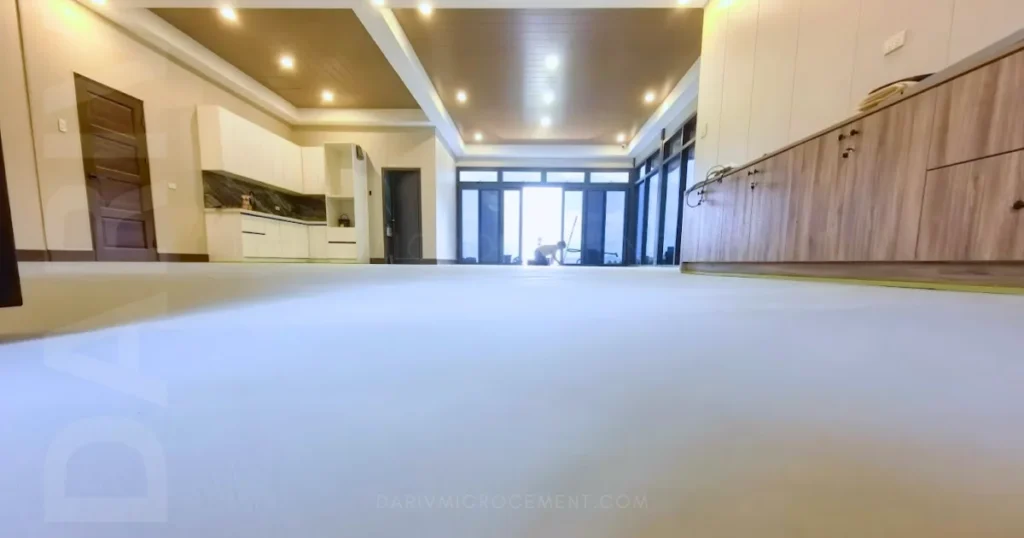
Microcement application for homes and businesses in the Philippines
As of 2026, microcement application is transforming Philippine architecture and interior design. While traditional wall and flooring options have their advantages, microcement offers finishes with high-level durability and minimalist aesthetics.
Today, microcement application is popular among designers, architects, and homeowners. Let’s explore the different applications of microcement in the Philippines.
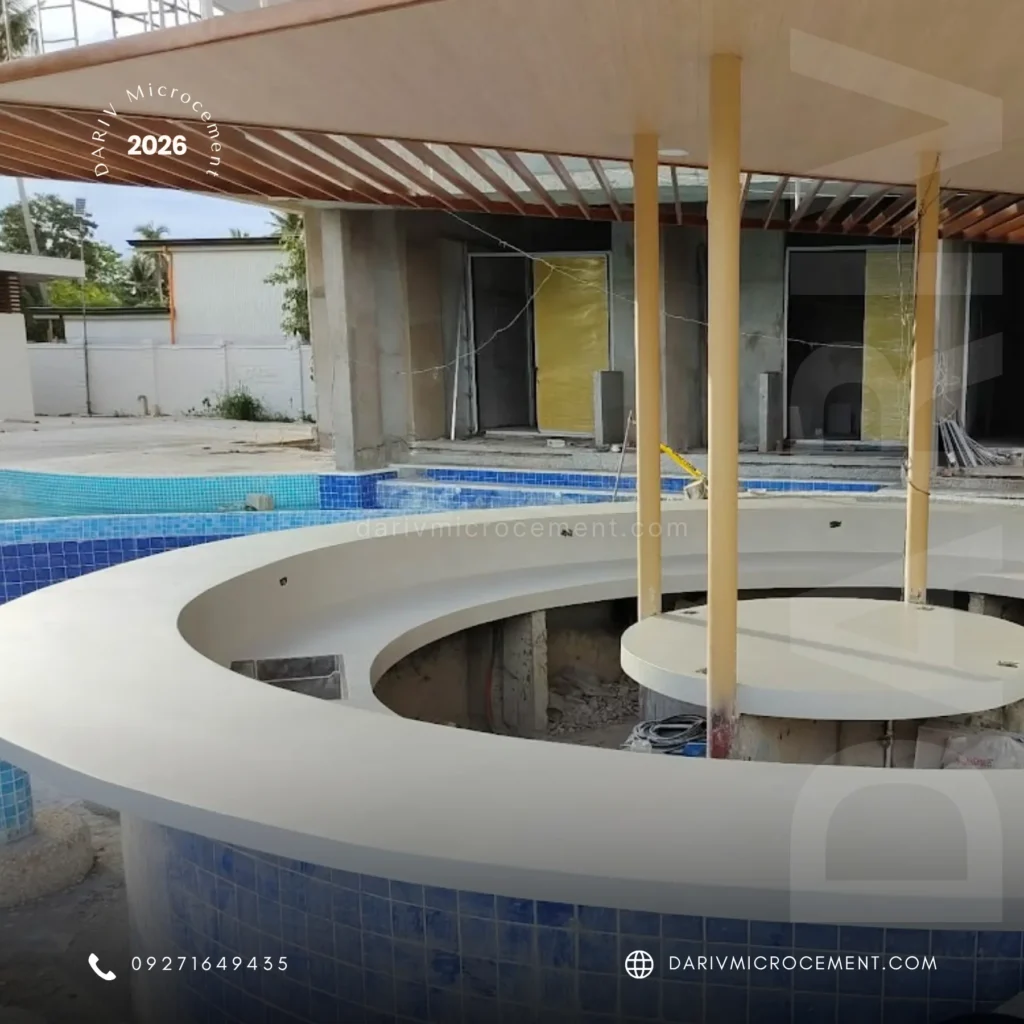
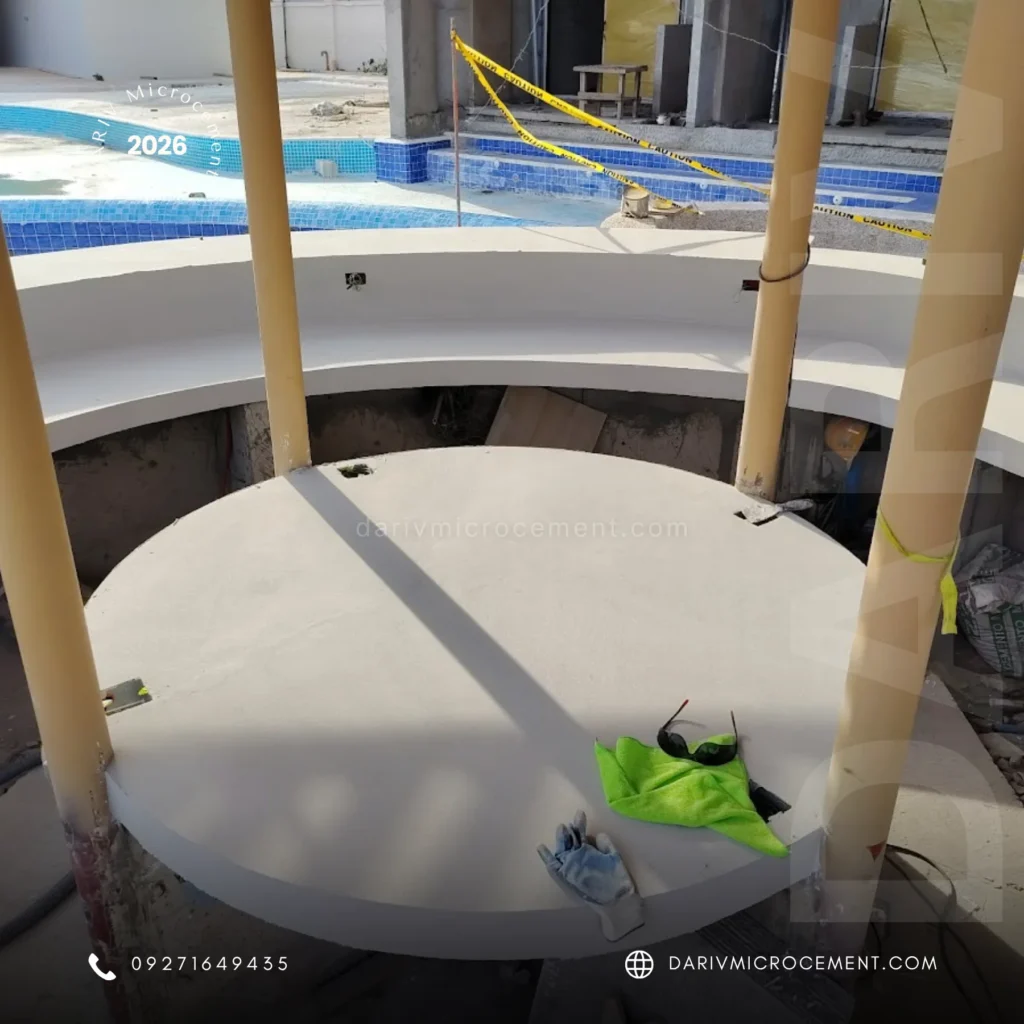
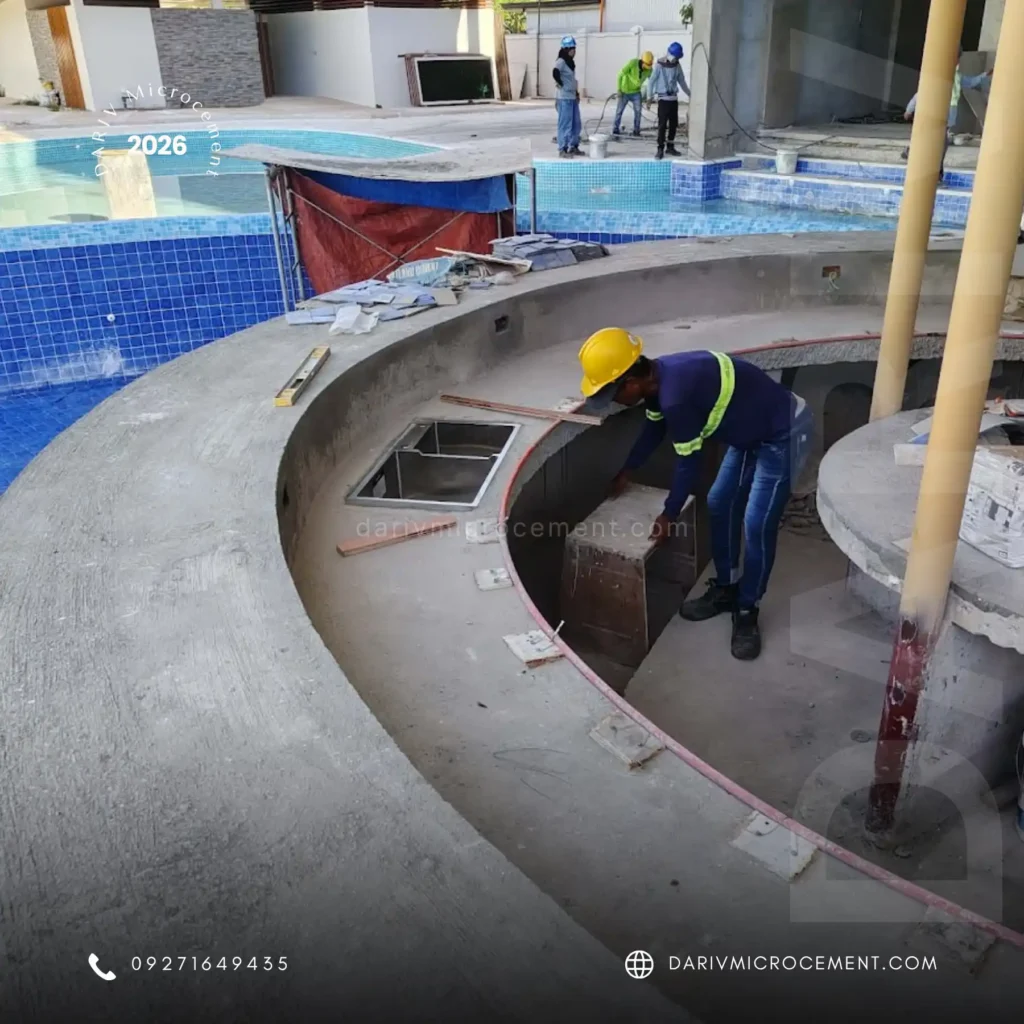
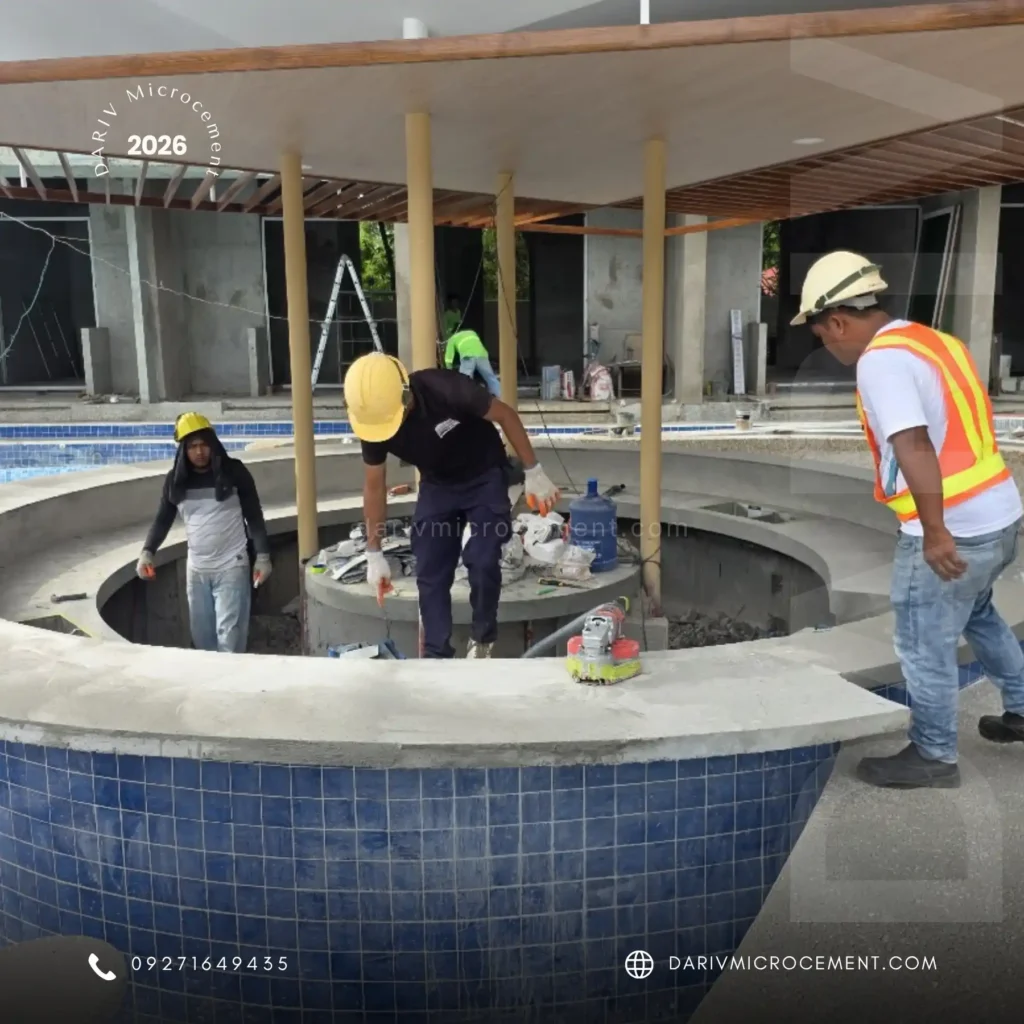
Microcement is now a preferred premium floor finish for homes and businesses in the Philippines. Microcement can be applied in different indoor and outdoor settings. In this picture below, we are using microcement for an outdoor pool area for a local resort. Because we are using premium materials, the microcement surface is waterproof, seamless, highly durable, and easy to maintain.
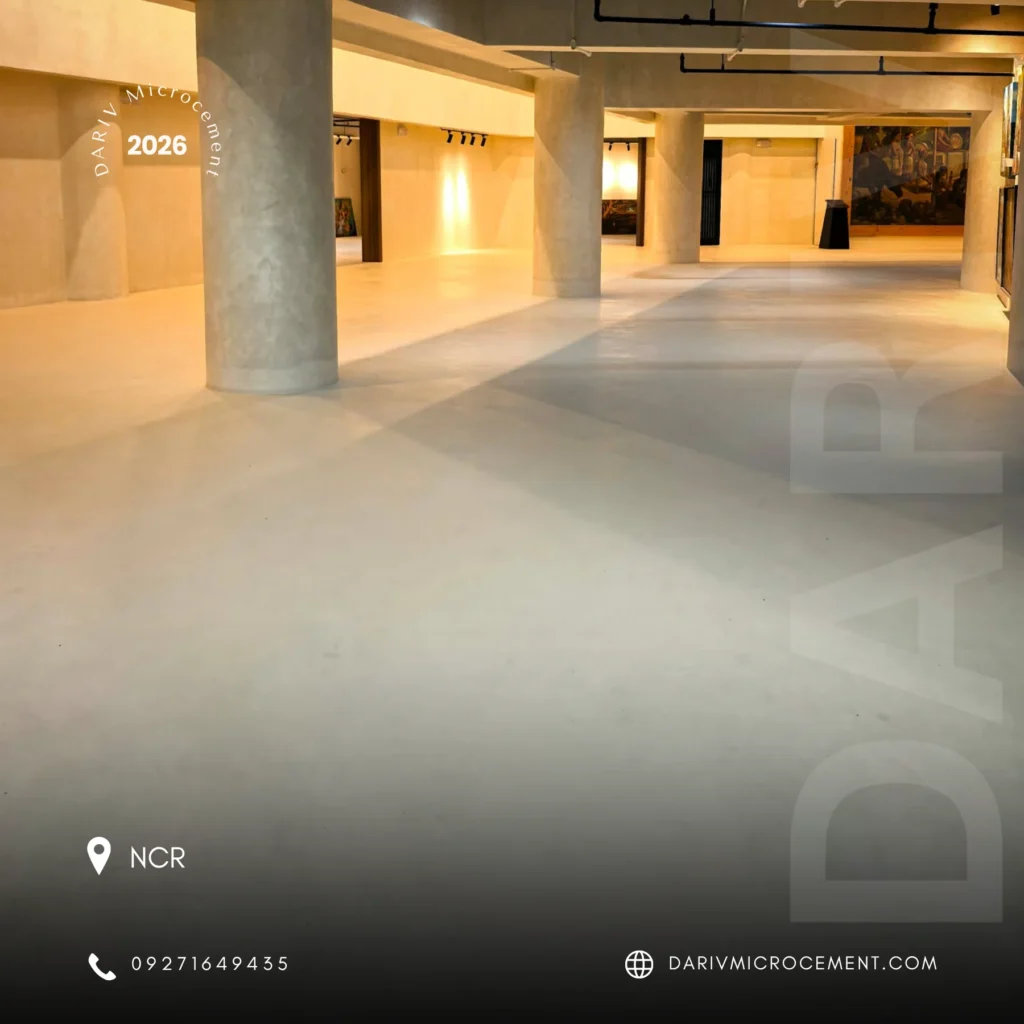
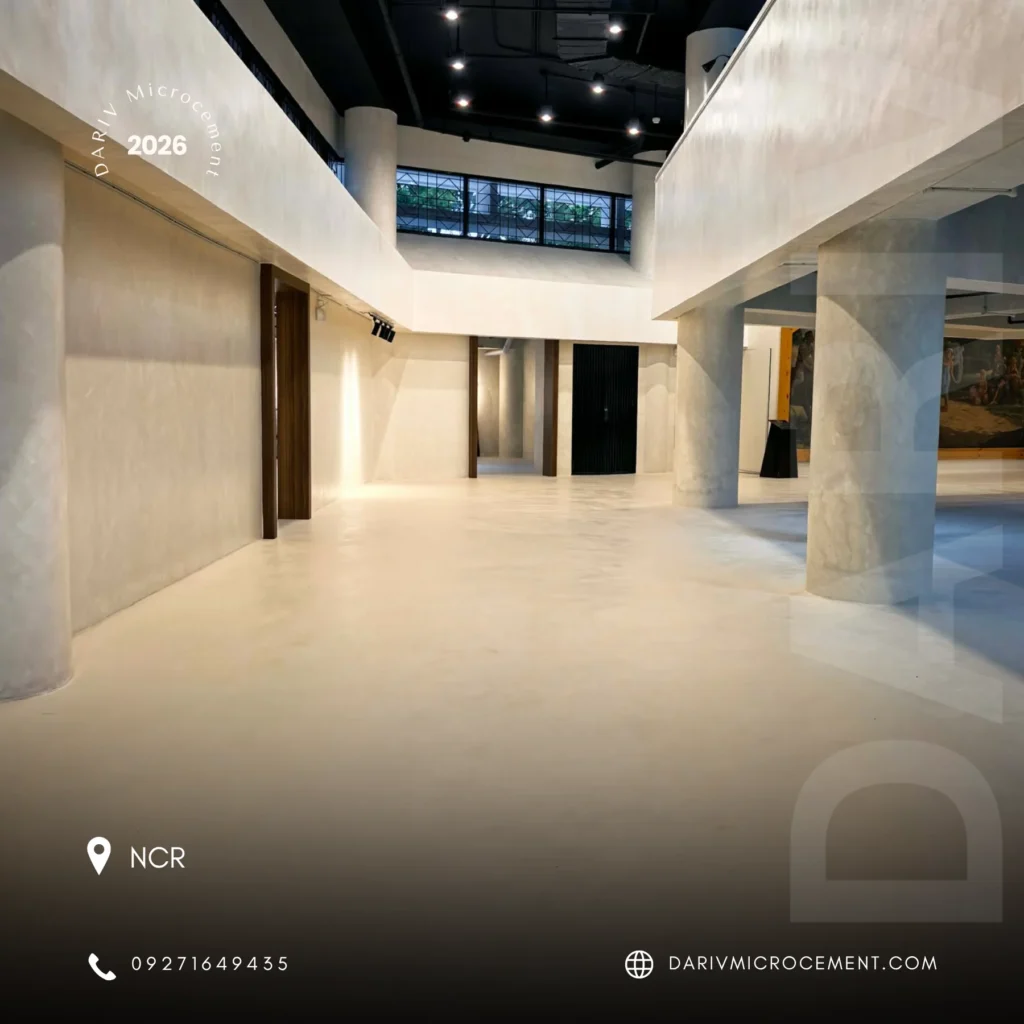
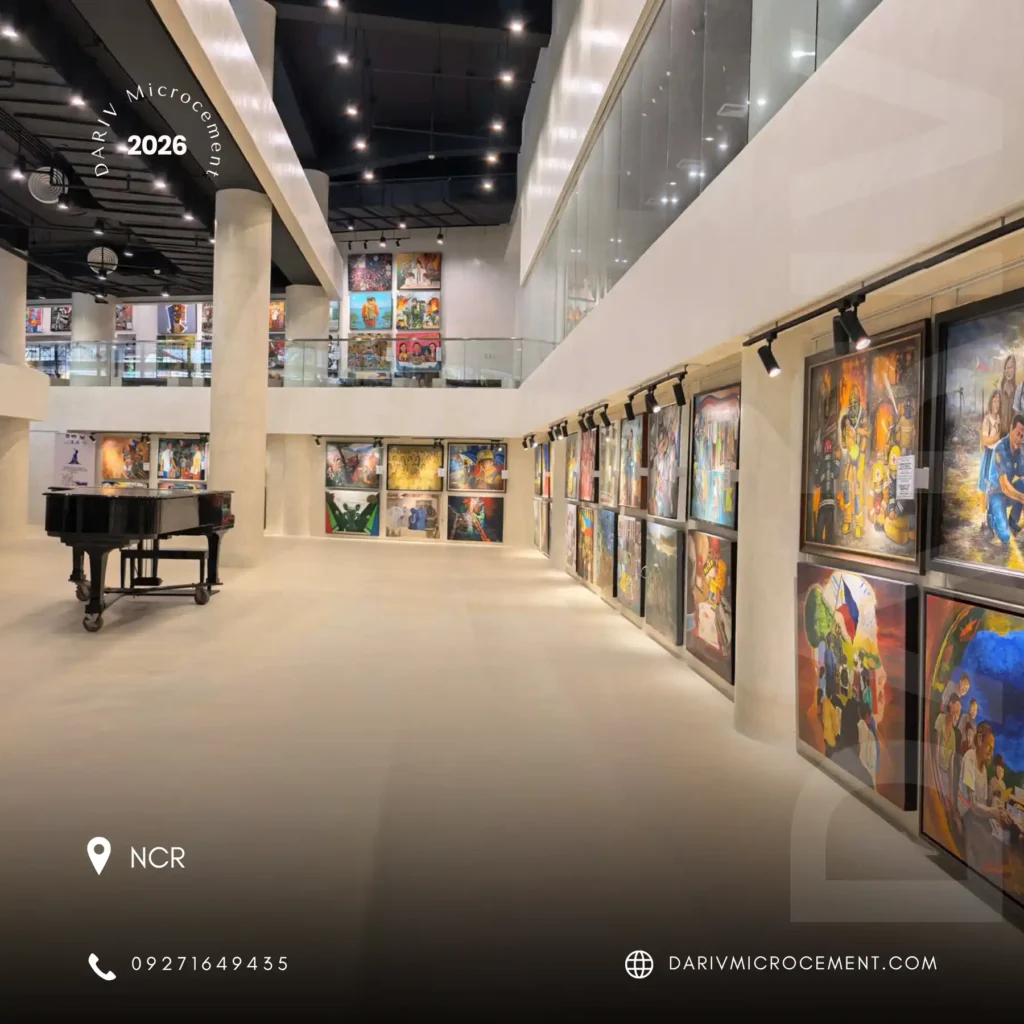
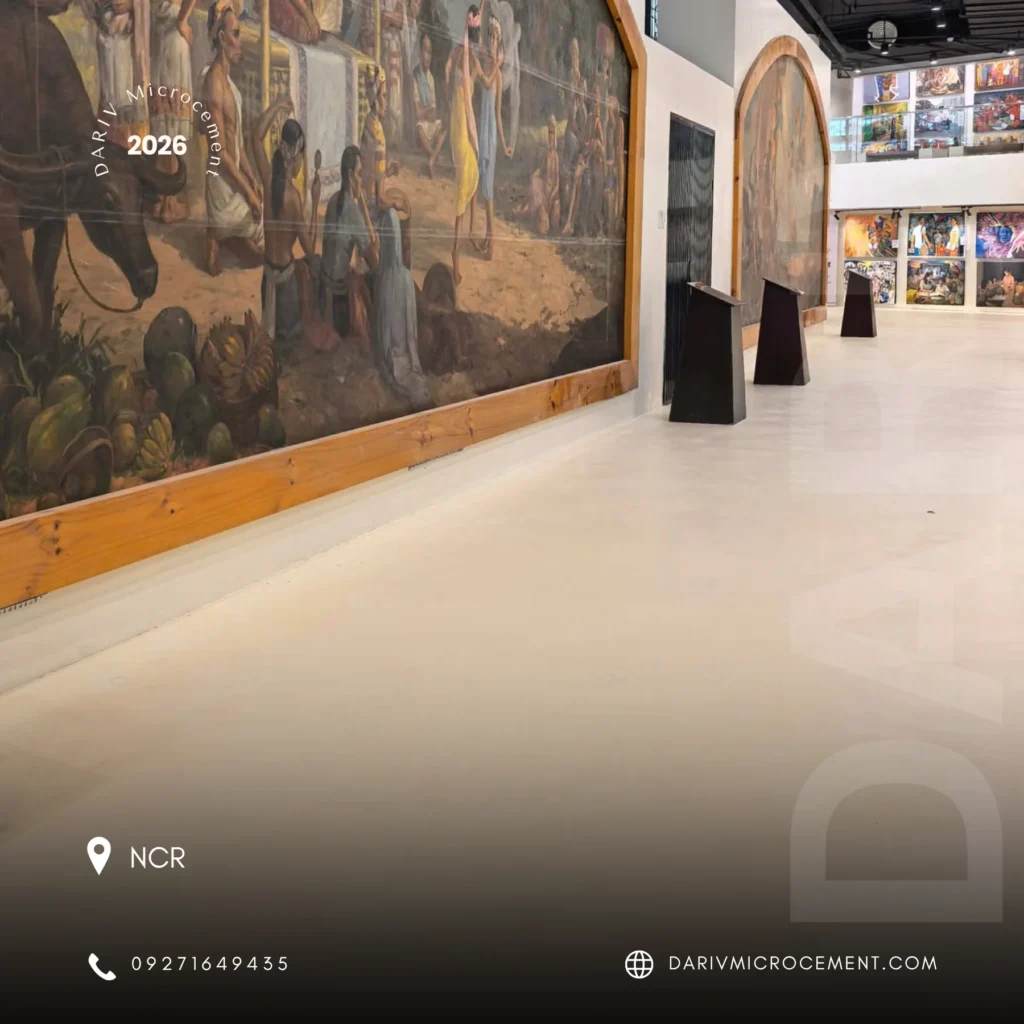
Microcement is an excellent finish for floors. This project, for instance, is what DARIV completed for a museum in NCR. The museum supervisors chose microcement because it complements the artistic value of the artifacts they display. Knowing that the museum will be opened to the public, they understand that a microcement floor is their best option for durability and aesthetic appeal.
The ease of microcement application
Microcement is an emerging technology in the Philippine construction industry. Also called micro-topping or micro concrete, microcement is made from cement mixed with different polymers and additives.
In the Philippines, microcement application is useful for a wide and diverse range of surfaces. You can use it for floors, walls, countertops, shower rooms, furniture, and centerpieces. In addition, you can use it for outdoor spaces like terraces and patios.
Microcement can be combined with polished concrete for a sleek and durable interior. Polished concrete is great when the floor experiences high-foot traffic. In a cafe, for example, you can opt for polished concrete for the flooring, and then choose microcement for the kitchen tops, comfort room, sink, and walls.
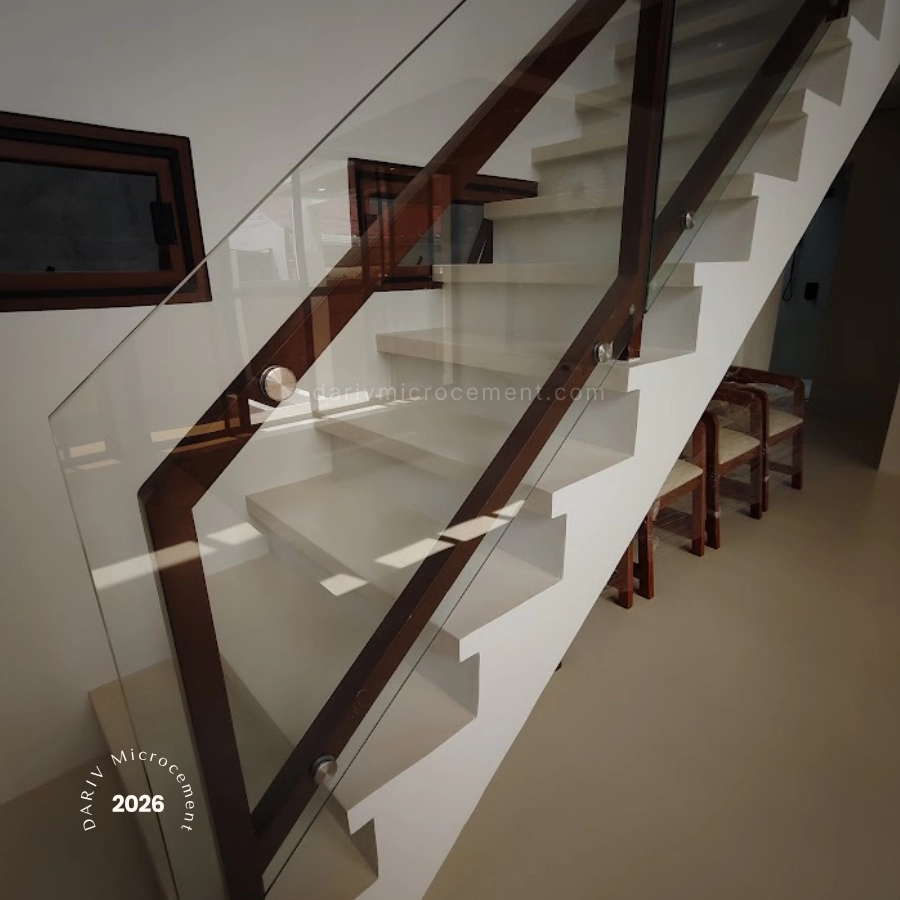
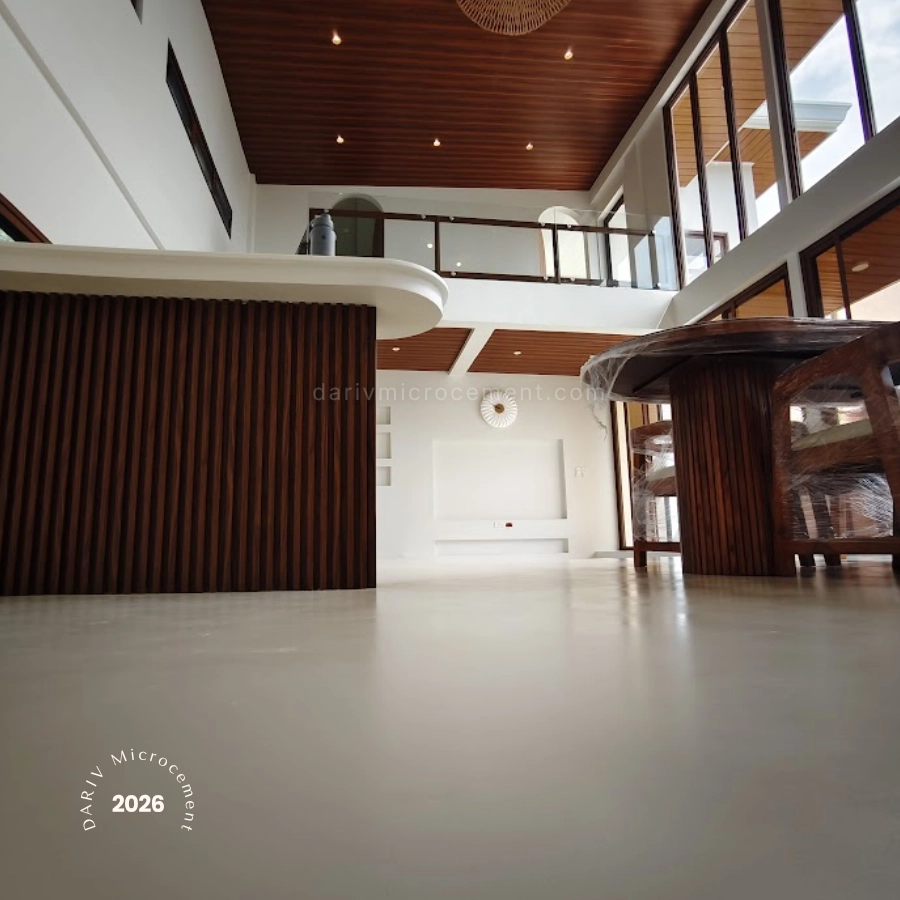
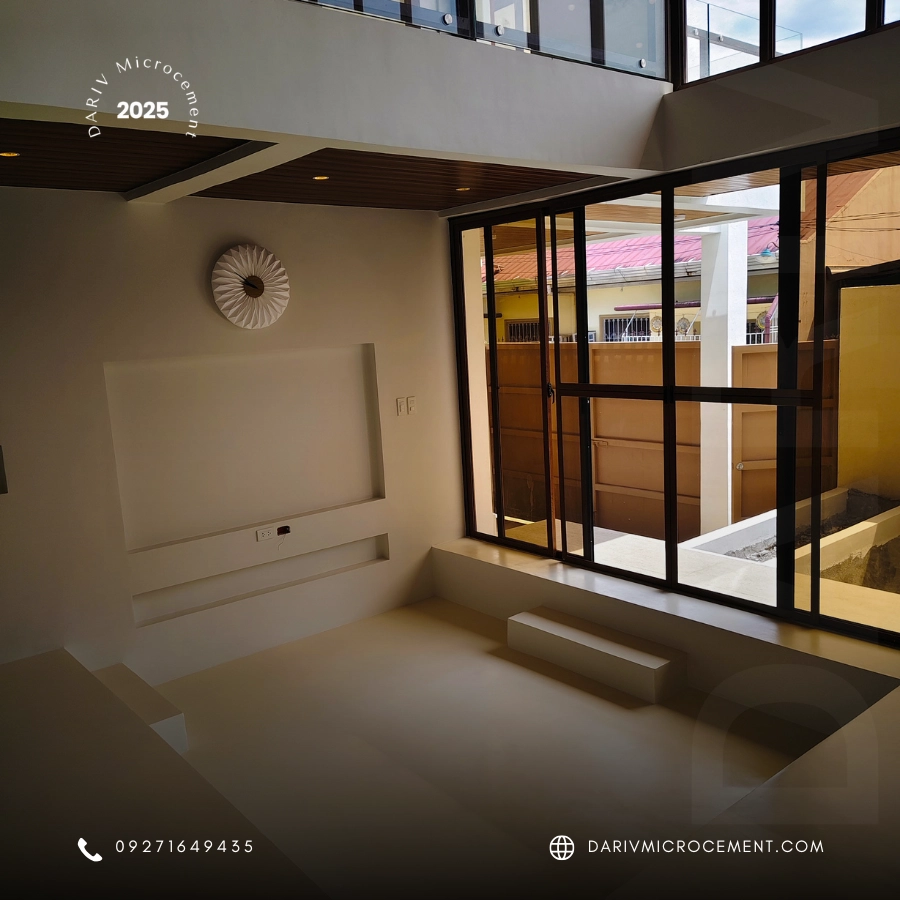
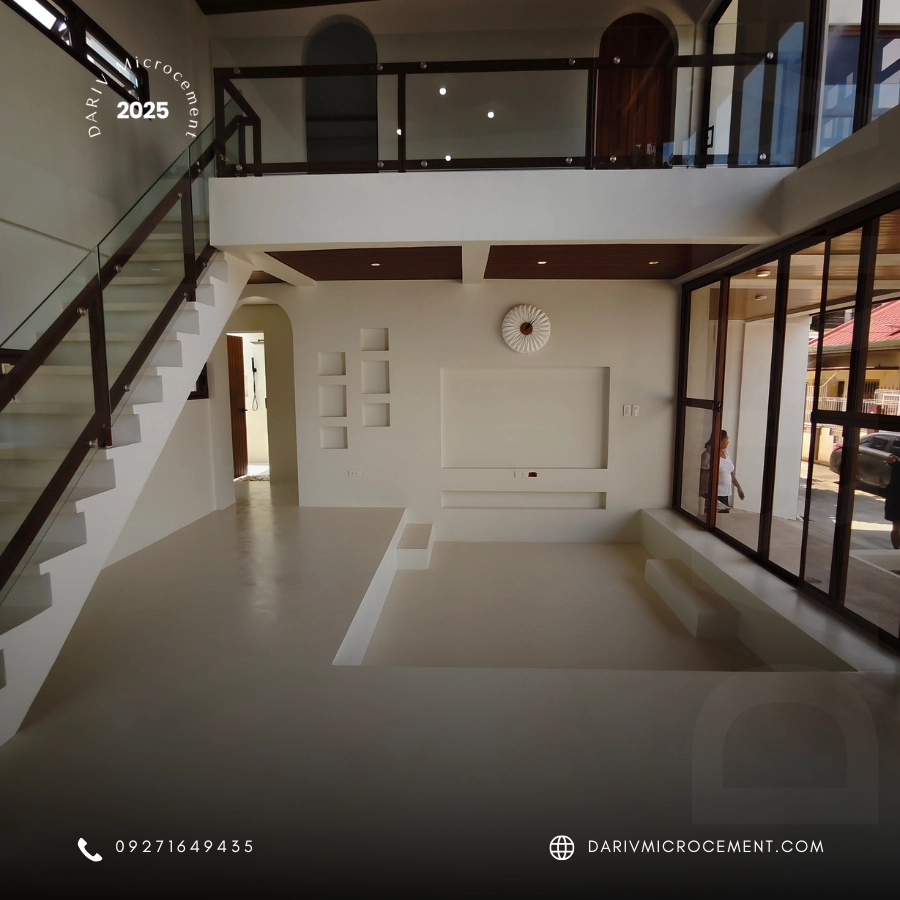
In this example, the client used microcement for the floor and stairs, to match the wooden oriental interior design they wanted for their home.
Benefits of microcement application in concrete finishes
For homes and offices, microcement application offers many advantages that make it a great choice for your concrete finish:
Seamless Look. Microcement provides a continuous surface without grout lines or joints. Through microcement, your space gets a modern and elegant appearance.
Versatility: You can choose from various colors and textures to match your style. Regardless of the structure you want to be processed, microcement can give you a sleek modern look or a rustic feel.
Durability: Microcement is proven to be tough. When applied on floors, microcement can handle heavy foot traffic and the force of daily usage. Moreover, you can combine microcement with polished concrete. Use polished concrete for your floor and make microcement the medium for your walls and countertops.
Easy Maintenance: Microcement requires very minimal upkeep. You only need to sweep or wipe the cement with microfiber to maintain its look and shine.
Quick Installation: Applying microcement is faster than traditional finishes in the Philippines. Specifically, its features reduce installation time and help save on labor costs.
- Water-Resistant: With the right materials, application, and sealing, microcement becomes fully waterproof and mold-resistant, making it a highly sought-after material for wet rooms, bathroom walls, and kitchen countertops in the Philippines.
Important factors to consider from microcement
Labor-Intensive: The application is highly artisanal and multi-layered, involving primers, fiberglass mesh, base coats, finish coats, and sealers. The process can take up to a full week, making installation costs per square meter higher than standard tiles or epoxy. As of May 2026 ranges from Php4,600 to Php5,600 per square meter.
Dependency on Skilled Artisans: Microcement is strictly not a DIY-friendly product. We know of property owners in the Philippines who tried applying microcement with the help of a local mason who is knowledgeable with applying stucco and cement (palitada). Since they are not trained with microcement application, the outcome was a mess. Poor workmanship can easily lead to delamination, uneven textures, or devastating water seepage in shower areas.
Vulnerability to Substrate Movement: While the polymer blend provides some flexibility to bridge hairline fractures, significant movement or structural shifting in the underlying substrate will inevitably telegraph through the coating, causing cracks. Because of this, it is super important to ensure that the substrate is well prepared before applying microcement.
Surface Vulnerability: Though exceptionally durable for daily use, it is not indestructible. Dropped heavy objects can dent or scratch the finish, and high-traffic areas require periodic resealing every few years to maintain the protective barrier. If you need heavy duty floors for your business, go for PU Mortar flooring. This is best for floors that need exceptional thermal shock resistance, high chemical endurance, resistance to extreme impact and abrasion, and superior moisture tolerance.
Comparison between Microcement and other flooring options
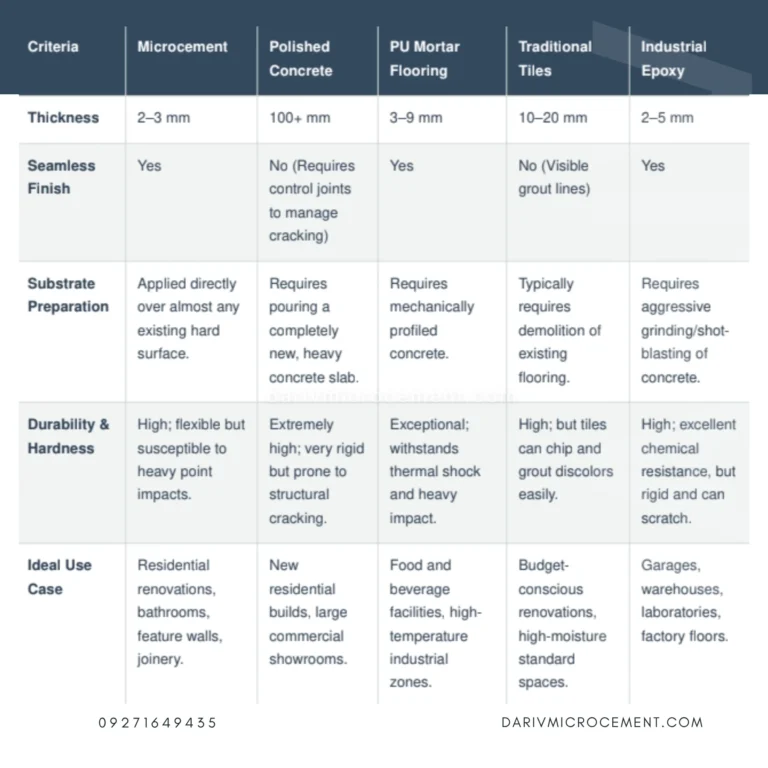
To give you an overview of how microcement compares with other flooring options, such as polished concrete, PU mortar flooring, traditional tiles, and industrial epoxy, check this chart.
In summary, DARIV Microcement is revolutionizing concrete finishes in the Philippines. Let’s give your space seamless design, versatility, durability, and easy maintenance. Whether for residential or commercial spaces in the Philippines, microcement is one of your best options for enhancing your concrete environment with style, stability, and finesse.