
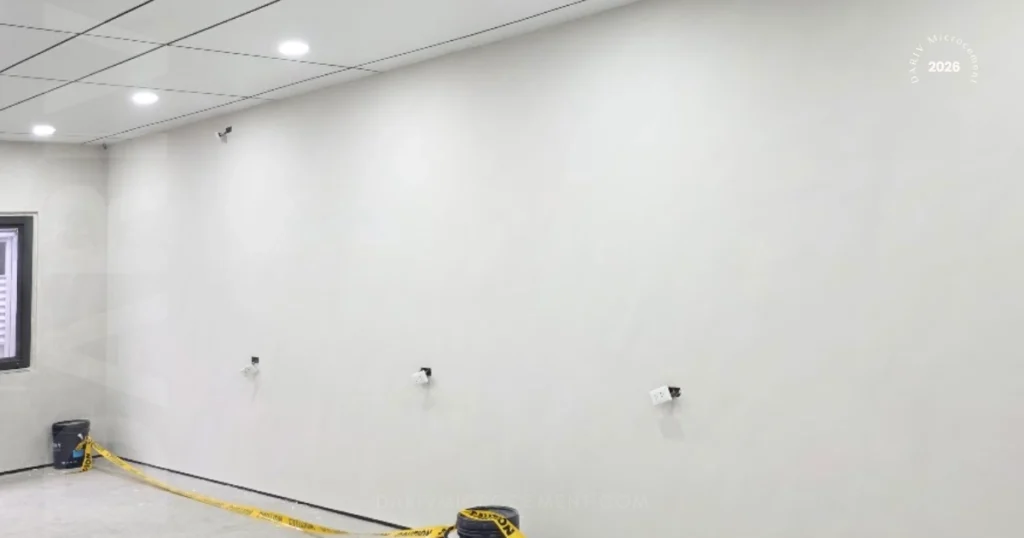
Microcement Walls Cost in the Philippines: What Property Owners Need to Know
As of 2026, microcement walls cost in the Philippines is between PHP4800 – PHP5600. Here’s an overview of microcement for walls and the investment you need.
As architecture in the Philippines continue to evolve, homeowners, architects, and commercial developers are using microcement for their walls. With their seamless appearance, minimalist aesthetic, and exceptional versatility, microcement walls have become a favorite for luxury homes, restaurants, hotels, offices, and retail spaces.
If you’re planning a construction or renovation project, it’s important to understand the microcement walls cost in the Philippines, the factors that influence pricing, and why choosing the right materials and applicators can make all the difference.
What is Microcement and why use it for Walls?
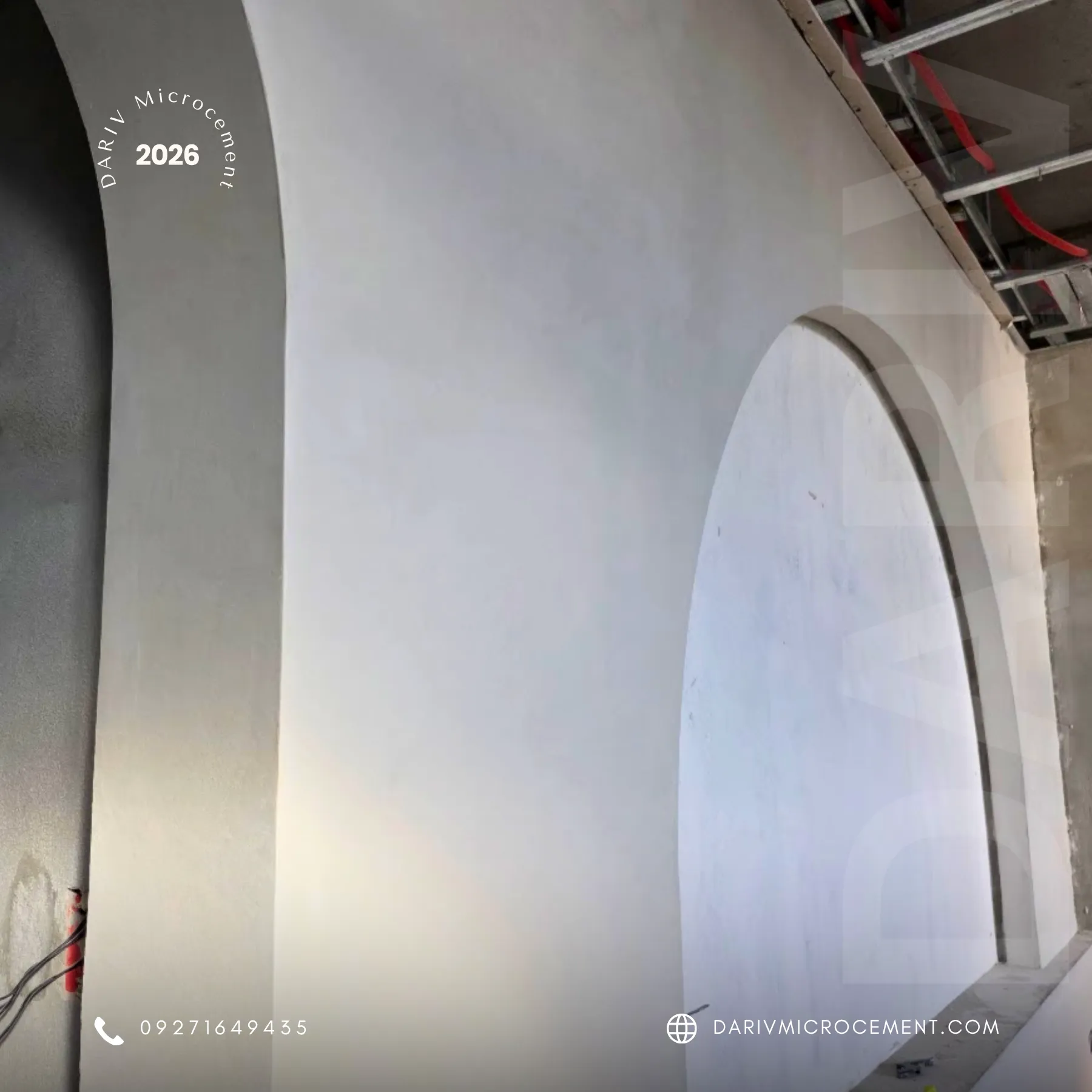
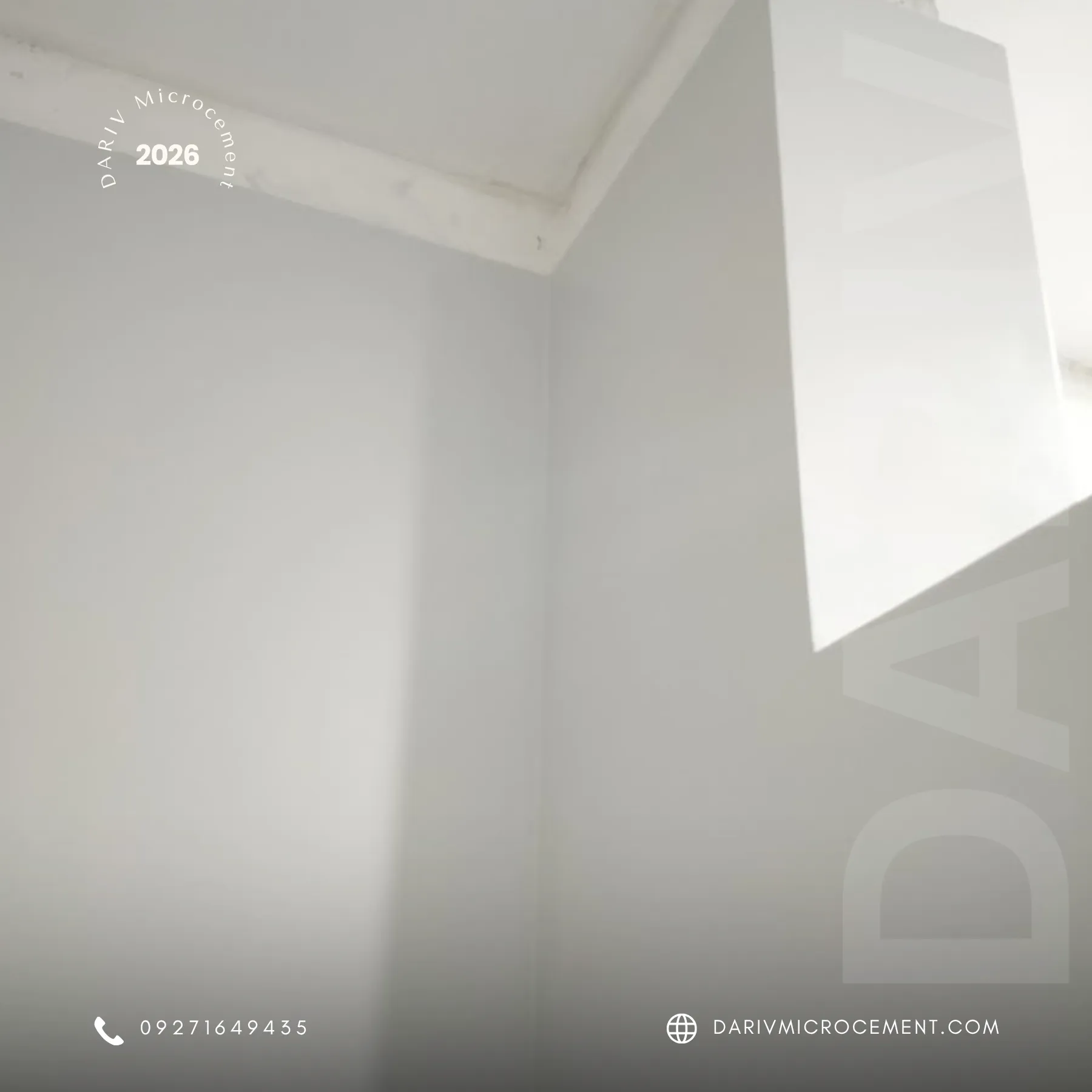
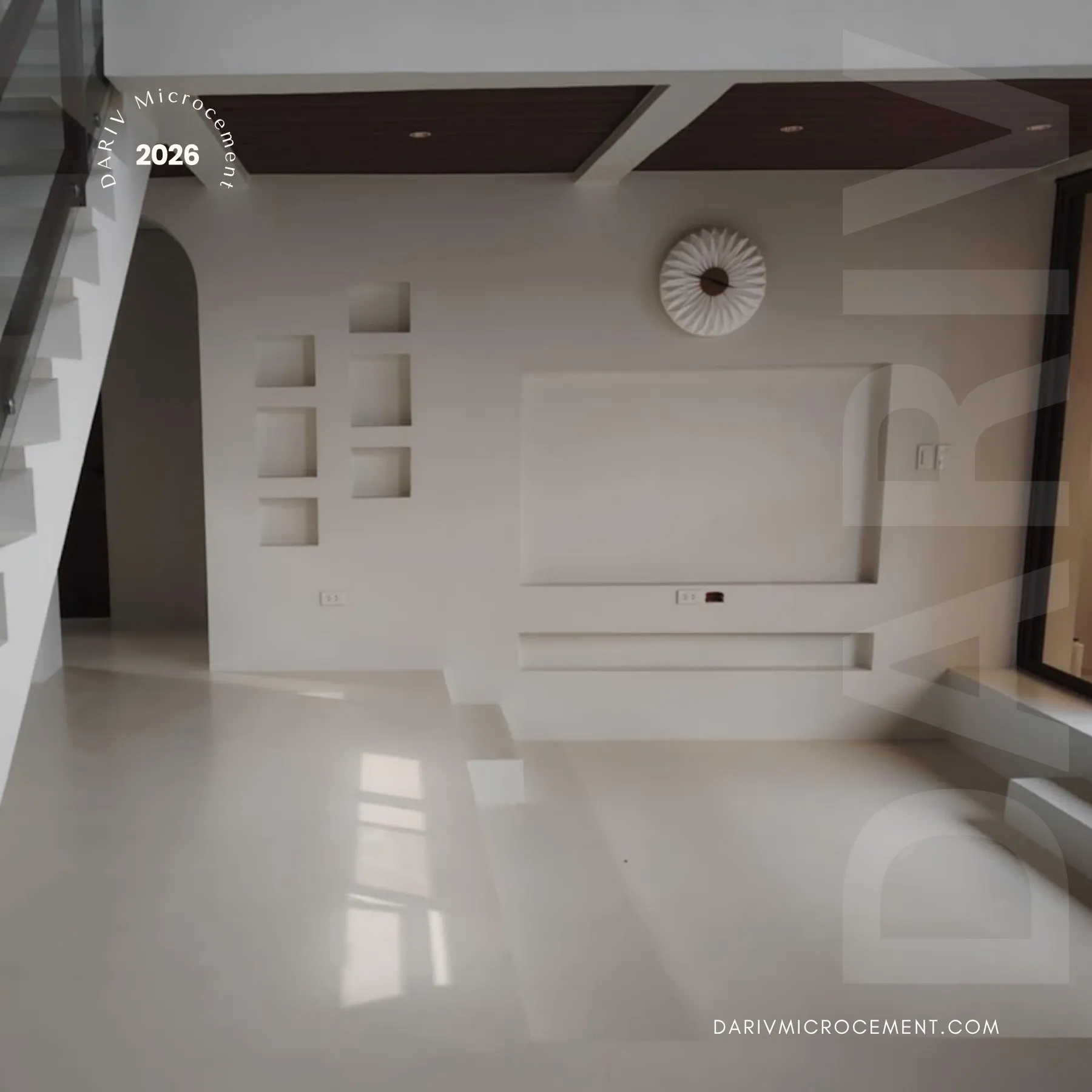
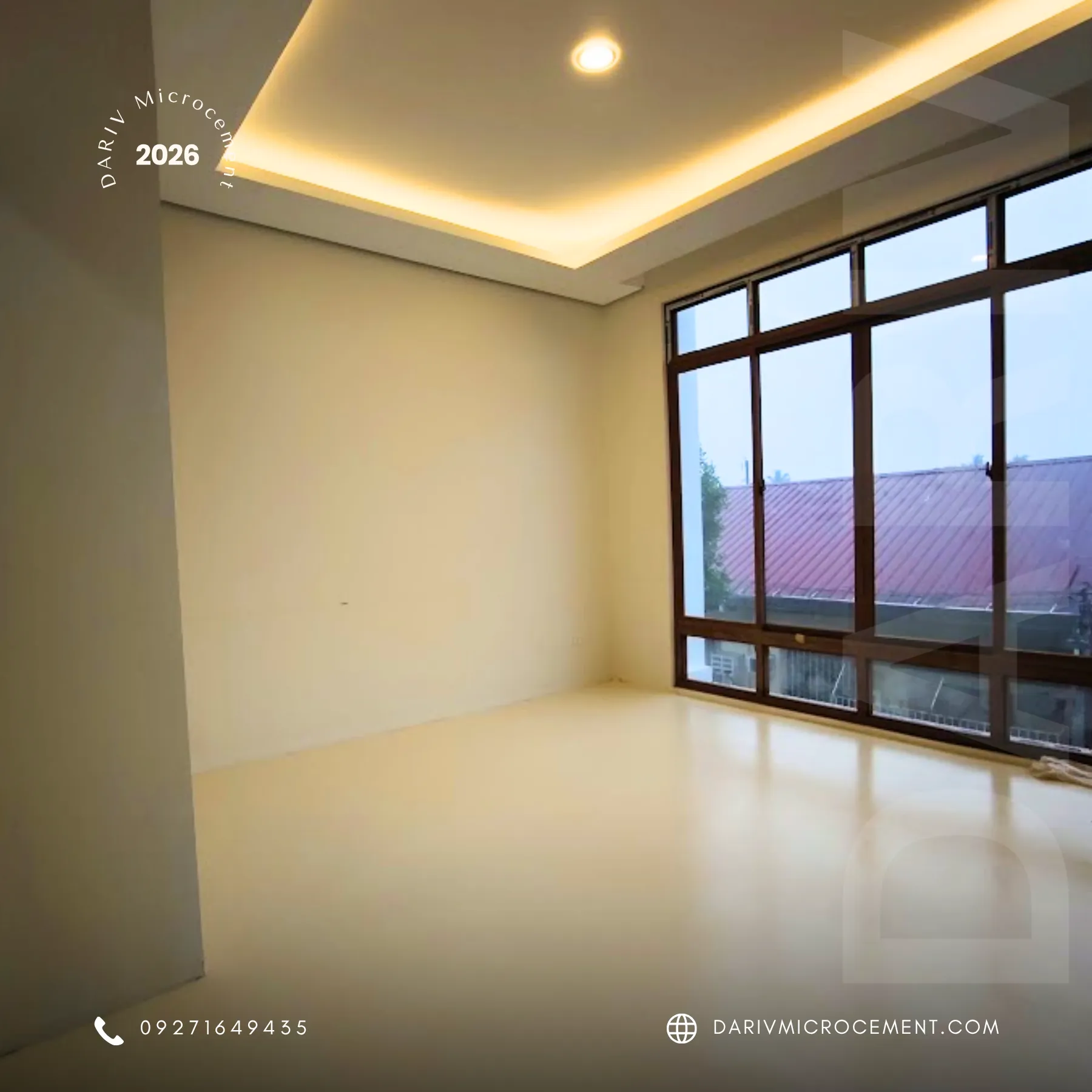
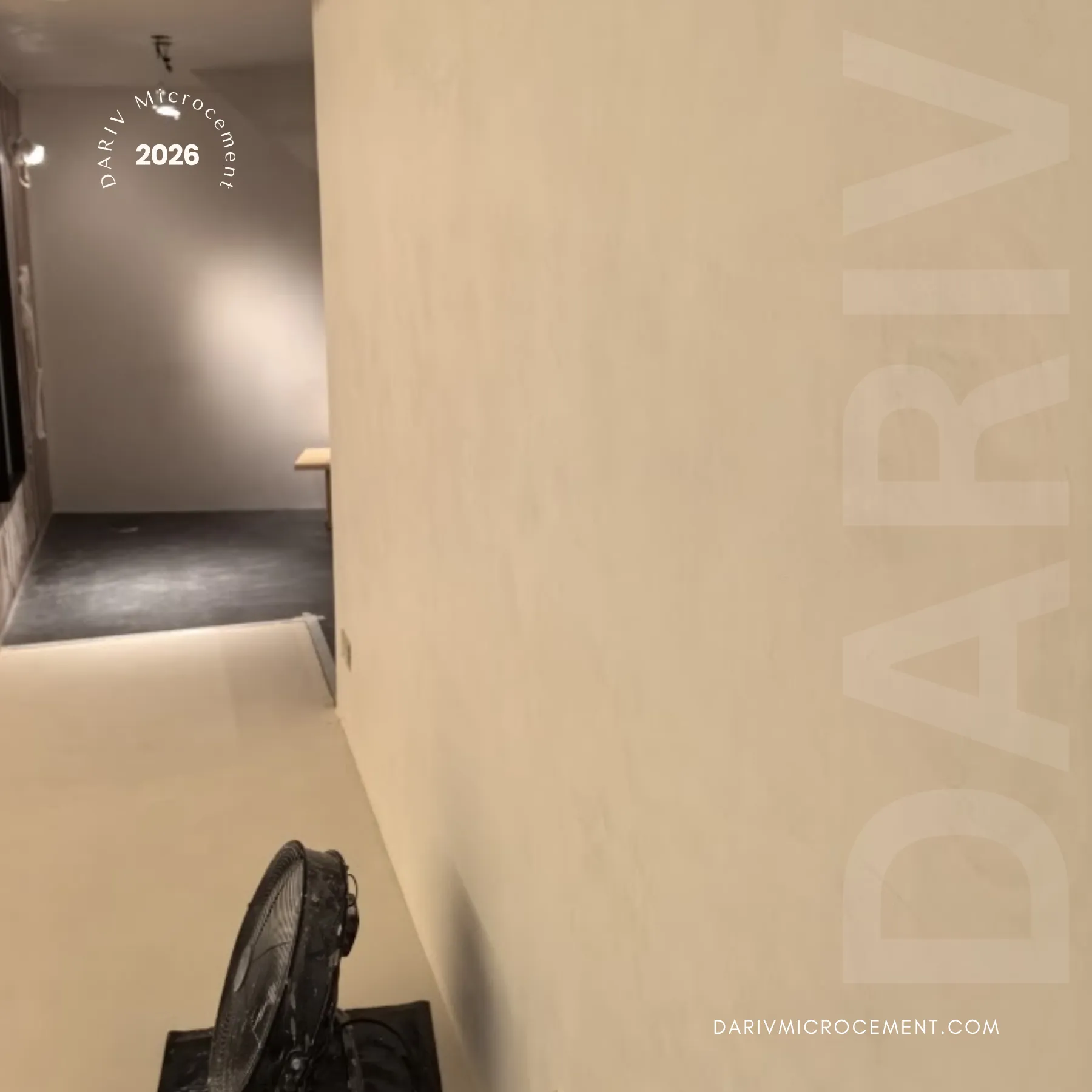
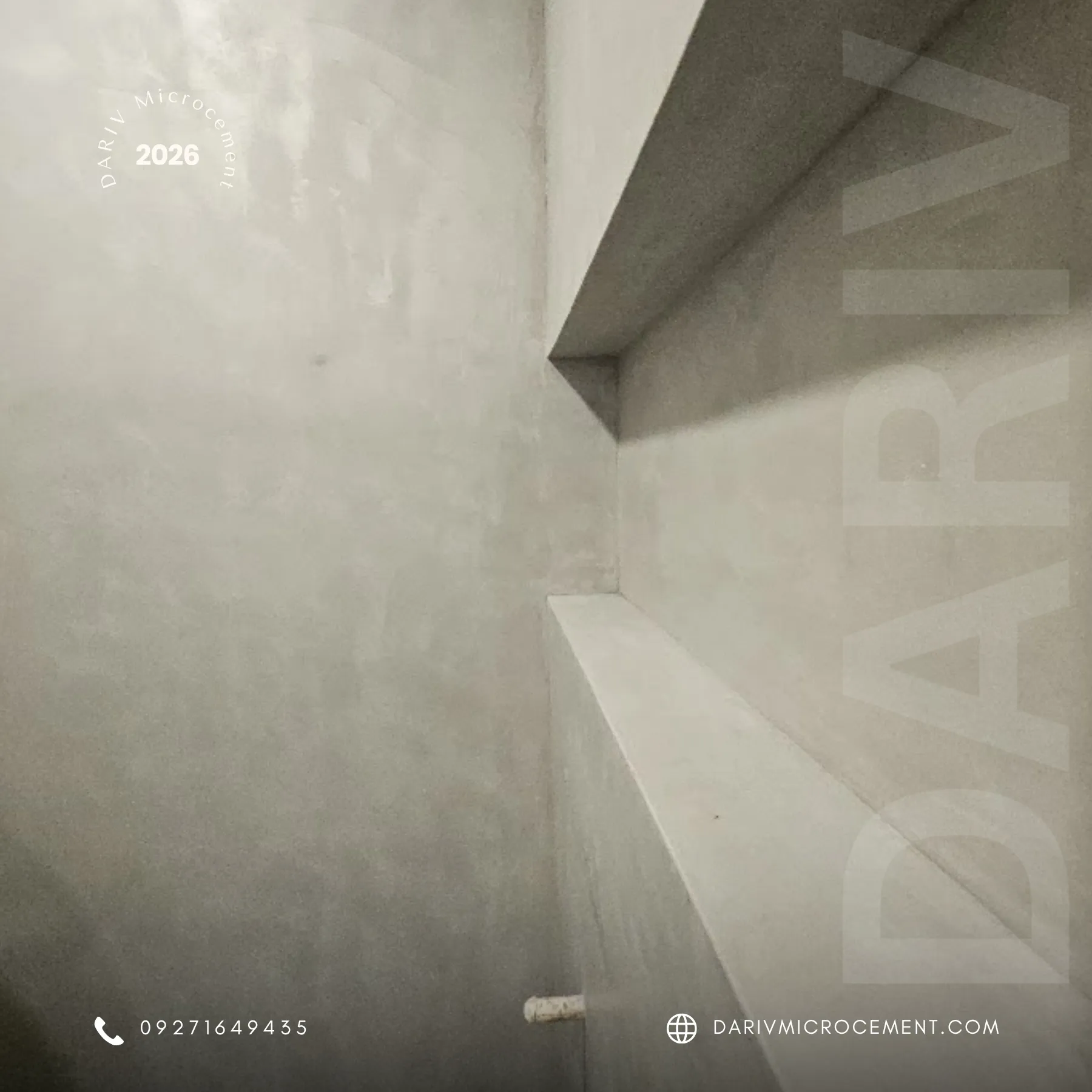
Microcement is a high-performance decorative coating made from a blend of cement, polymers, fine aggregates, and specialized additives. Applied in thin layers—typically only 2–3 mm thick—it creates a continuous, seamless surface without the need for grout lines.
Unlike traditional cement finishes, microcement can be installed over many existing surfaces, including concrete, plaster, drywall, ceramic tiles, and masonry, reducing demolition costs while providing a sophisticated architectural finish.
Microcement walls are available in a wide variety of colors and textures, allowing designers to achieve everything from industrial concrete aesthetics to warm contemporary finishes.
What is Microcement and why use it for Walls?
One of the most common questions asked by property owners concerns microcement walls cost in the Philippines. The answer depends on several important factors.
The overall price usually varies depending on:
- Total wall area
- Surface preparation required
- Quality of the microcement system
- Number of finish coats
- Decorative texture selected
- Project location
- Experience of the applicator
In general, premium microcement should be viewed as a high-end architectural finish rather than simply another type of paint. While the initial investment may be higher than conventional wall coatings, the long-term durability, visual appeal, and lower maintenance often make it a better value over the life of the building.
Large projects typically enjoy lower costs per square meter because mobilization, logistics, and preparation costs are spread across a larger installation area.
Understanding Microcement Walls Cost
In the Philippines, the cost of microcement for walls is influenced by much more than the decorative coating itself. A professional installation involves multiple carefully controlled steps that contribute to the finished product’s strength and appearance.
A complete microcement wall system usually includes:
- Surface preparation
- Primer application
- Reinforcement mesh (when necessary)
- Base coats
- Decorative finish coats
- Protective sealers
- Final polishing and quality inspection
Each layer in this microcement system performs an important function. Skipping any of these steps may reduce the wall’s durability and lead to premature cracking, discoloration, or peeling.
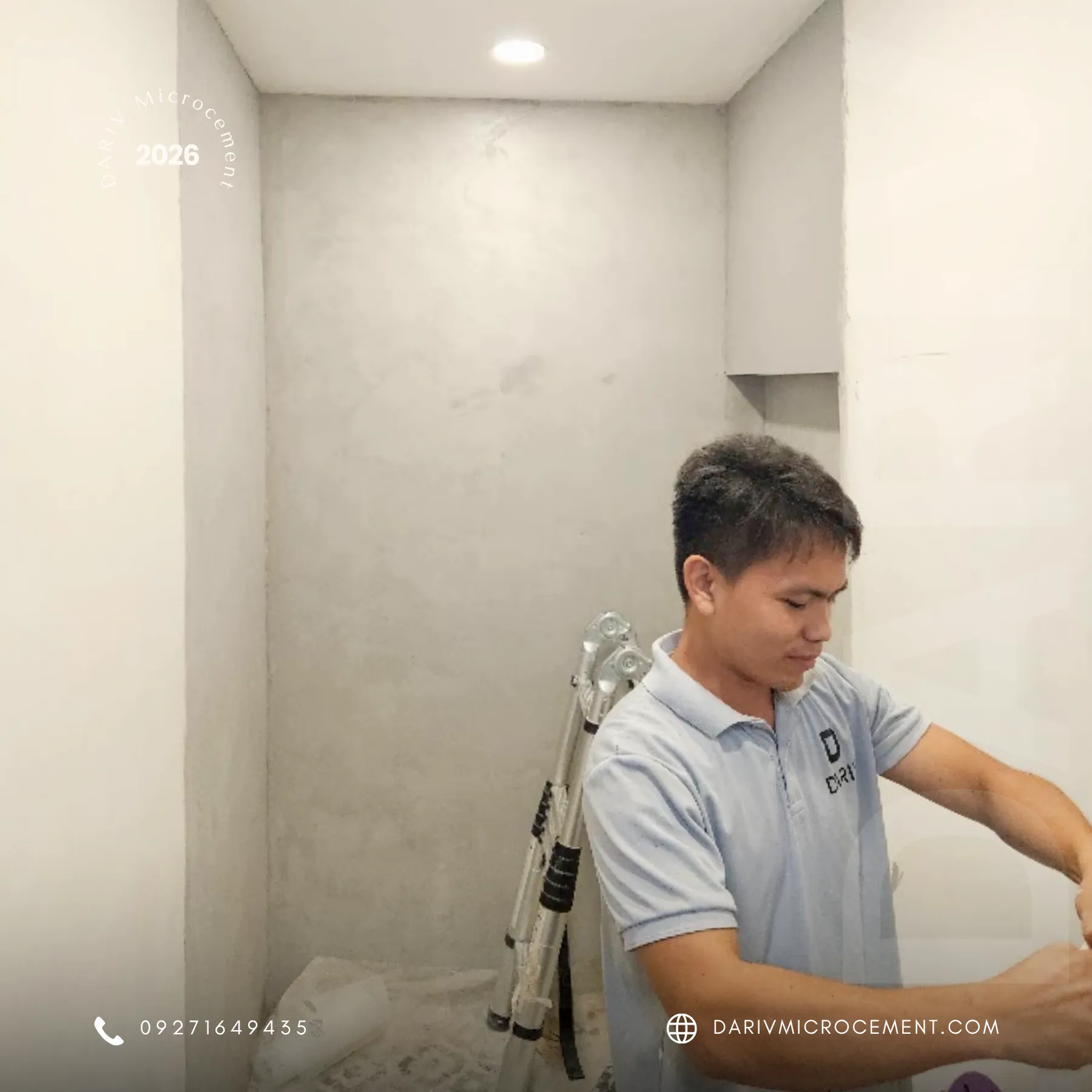
High-quality installations also require specialized tools, proper curing times, and experienced craftsmanship—factors that contribute significantly to the overall project cost.
When evaluating quotations, property owners should compare the complete installation system rather than simply choosing the lowest price. Microcement, for instance, can perfectly fit into architectural designs involving premium aluminum doors and windows. Building finishes for homes and offices, for example, need wall surfaces that are minimalist and durable at the same time—one that is possible through microcement.

Benefits of Using Microcement for Walls in Tropical Countries
The benefits of using microcement for walls in tropical countries are one of the main reasons the material has gained popularity across Southeast Asia, including the Philippines. These benefits include:
Excellent Humidity Resistance
The Philippines experiences high humidity throughout much of the year. Properly sealed microcement performs well in these conditions, making it suitable for bathrooms, kitchens, hotels, and commercial spaces.
Seamless Design
Because there are no grout joints, microcement creates a clean, uninterrupted appearance that makes spaces feel larger and more modern. The seamless finish also reduces areas where dirt and mold can accumulate.
Easy Maintenance
Unlike textured concrete or tiled walls, sealed microcement surfaces are easy to wipe clean. Routine maintenance typically requires only mild soap and water.
Versatile Design Options
Microcement works well with numerous architectural styles, including:
- Modern minimalist
- Industrial
- Scandinavian
- Mediterranean
- Contemporary luxury
- Japandi
At DARIV, our project engineers can create matte, satin, or textured finishes depending on the project’s aesthetic goals, and ultimately match the design with your preferred building finishes.
Lightweight Installation
Since microcement is applied in very thin layers, it adds minimal weight to the wall structure, making it suitable for renovations where structural loading must be minimized.
Challenges of Using Microcement for Walls in Tropical Countries
Although there are many advantages, understanding the challenges of using microcement for walls in tropical countries helps property owners make informed decisions.
High Moisture Levels
Excessive moisture can affect substrate preparation. Walls must be properly dried and evaluated before installation to prevent future bonding issues.
Temperature Variations
Daily heat cycles in tropical climates cause building materials to expand and contract. Proper installation techniques and flexible polymer-modified systems help accommodate these movements.
Exposure to UV Radiation
Exterior walls receive significant sunlight throughout the year. Using high-quality UV-resistant sealers helps preserve color and protects the finish from premature degradation.
Salt Air in Coastal Areas
Buildings located near the ocean experience higher salt exposure. Professional sealing and periodic maintenance become even more important in coastal environments.
Surface Preparation
Many installation problems occur because existing walls contain hidden moisture, loose plaster, or structural cracks. Thorough substrate evaluation is essential before any decorative coating is applied.
Fortunately, these challenges can be successfully managed when experienced professionals follow proper installation procedures.
Importance of Professional Applicators for Microcement
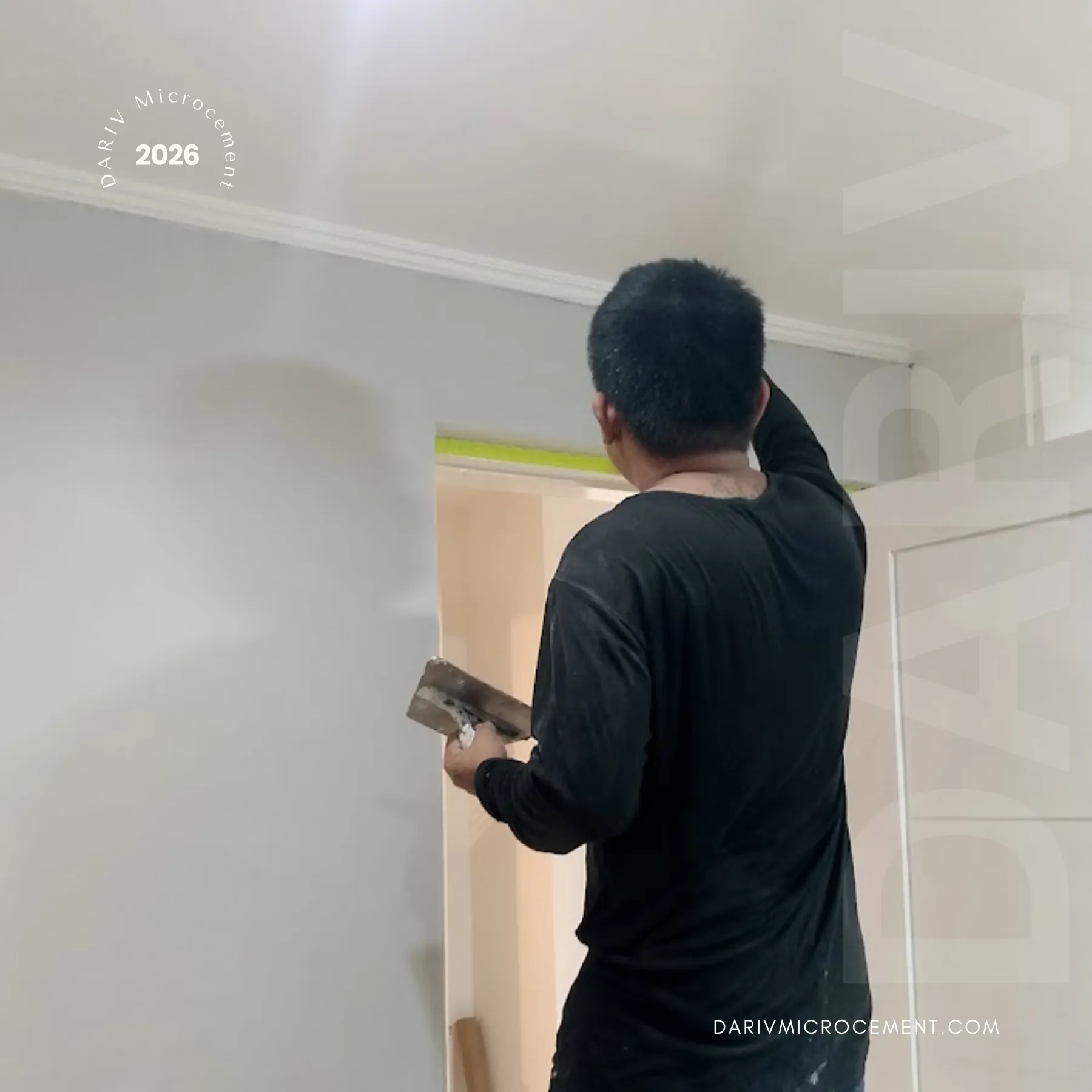
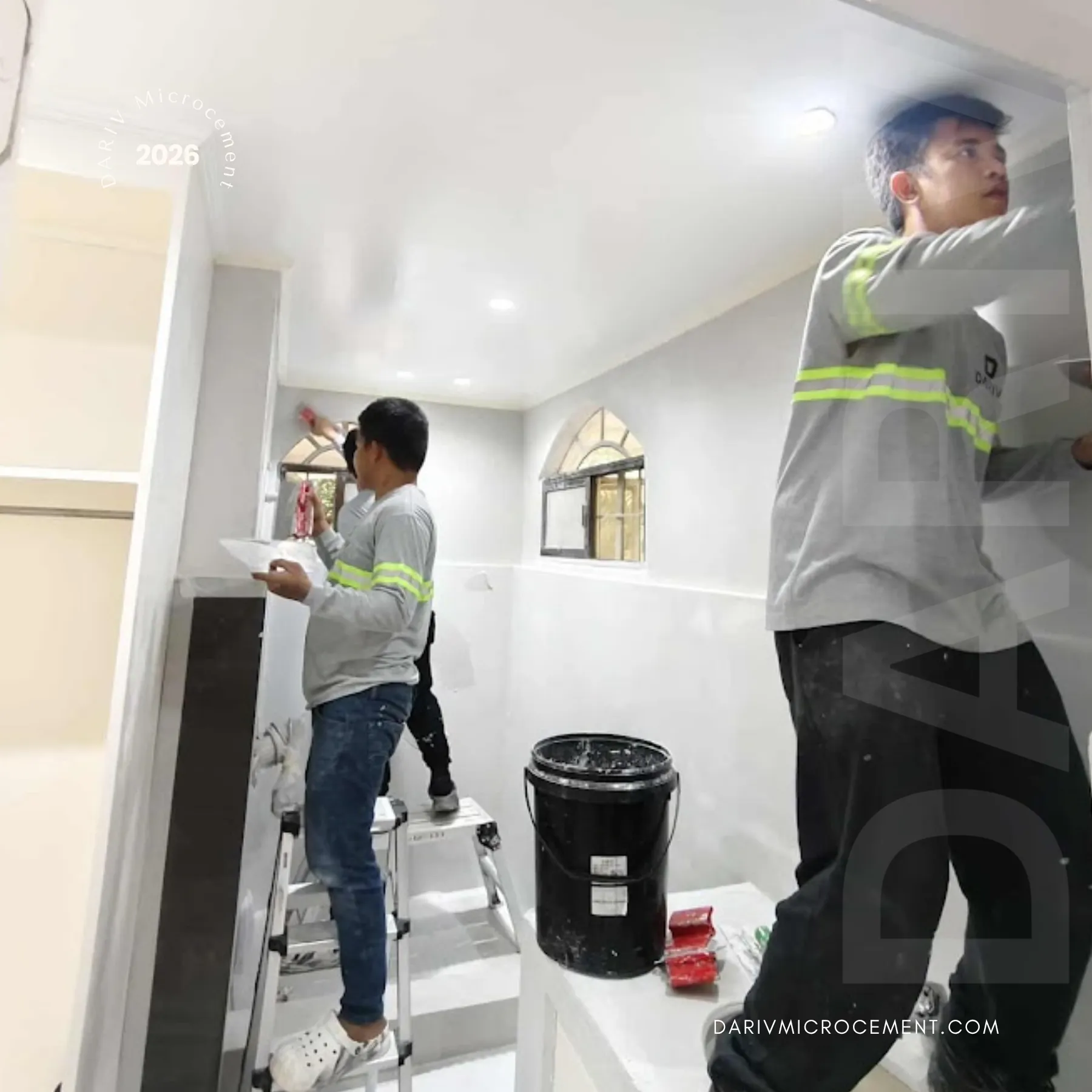
One of the biggest factors determining the success of any installation is the importance of professional applicators for microcement.
Unlike ordinary paint, microcement requires precise application techniques developed through training and experience.
Professional applicators understand:
- Proper substrate inspection
- Moisture testing
- Mixing ratios
- Layer thickness control
- Drying times
- Surface finishing techniques
- Sealer compatibility
Even premium materials can fail if installed incorrectly.
Experienced applicators also know how to avoid common issues such as:
- Uneven textures
- Trowel marks
- Air bubbles
- Delamination
- Color inconsistencies
- Cracking caused by improper curing
Choosing a certified or experienced installer like DARIV is necessary to get results with premium outcomes and longer-lasting results for your walls.
Importance of High Quality Microcement Materials
Equally important is the importance of high quality microcement materials.
Not all microcement products are manufactured to the same standards. Low-cost alternatives may appear attractive initially but often contain inferior polymers, lower-quality aggregates, or inadequate additives.
Premium microcement systems typically provide:
- Better adhesion
- Higher flexibility
- Improved crack resistance
- Stronger abrasion resistance
- Better UV stability
- More consistent colors
- Longer service life
High-quality protective sealers also improve resistance against stains, water penetration, cleaning chemicals, and everyday wear.
For commercial spaces with heavy traffic, investing in premium materials often reduces maintenance costs over the building’s lifetime.
Is microcement walls cost worth it?
When considering the overall worth of microcement walls cost for your project in the Philippines, evaluate more than the initial installation price.
Microcement offers a unique combination of architectural beauty, design flexibility, durability, and ease of maintenance. It eliminates grout lines, modernizes existing surfaces, and provides designers with virtually unlimited creative possibilities.
However, the best results come from combining premium materials with highly skilled installers. Cutting corners on either component may lead to repairs that cost far more than the initial savings.
Whether you’re building a luxury residence, renovating a boutique hotel, upgrading a restaurant, or designing a modern office, microcement walls can deliver a timeless finish that performs well in the Philippine climate.
Consider the benefits of using microcement for walls in tropical countries, the challenges of using microcement for walls in tropical countries, the importance of professional applicators for microcement, and the importance of high quality microcement materials. Based on these details, you can make an informed investment that enhances both the beauty and value of your property for years to come.