TL;DR:
For regular spills on microcement, clean immediately with a damp microfiber cloth and water. For tougher stains, use a neutral pH cleaner and a microfiber rag—avoid hard scrubbers, as they can damage the surface. Ink and permanent marker stains are difficult to remove; acetone may fade them but not erase them completely. Prevent stubborn stains by wiping spills quickly and keeping strong staining agents (like markers) away from microcement. Always use high-quality sealing and proper maintenance to preserve durability and appearance. For persistent stains, consult a professional.
Here is how to clean microcement from spills and stains
To clean microcement properly from regular spills, you only need a microfiber rag and clean water. Always make sure to clean spills immediately so they would not dry up. For tough stains, use a microfiber rag and neutral pH cleaner.
Avoid using scrubbers because they can harm the coating and sealer of your microcement surface. Know that there are super tough stains that are difficult to remove fully from microcement.
Permanent markers, in particular, can leave stains that penetrate deep into any concrete surface. You can remove this ink using acetone, but these markers would still leave a blot on the microcement. It is best to always keep permanent markers away from your microcement surface to protect it from harmful stain. In case you need help with stubborn stains on microcement, it is best to call a professional microcement applicator to avoid damaging the microcement surface.
Clean microcement the right way
Learn how to clean microcement properly from regular spills and stains. This will keep your microcement surfaces clean, sturdy, and looking good.
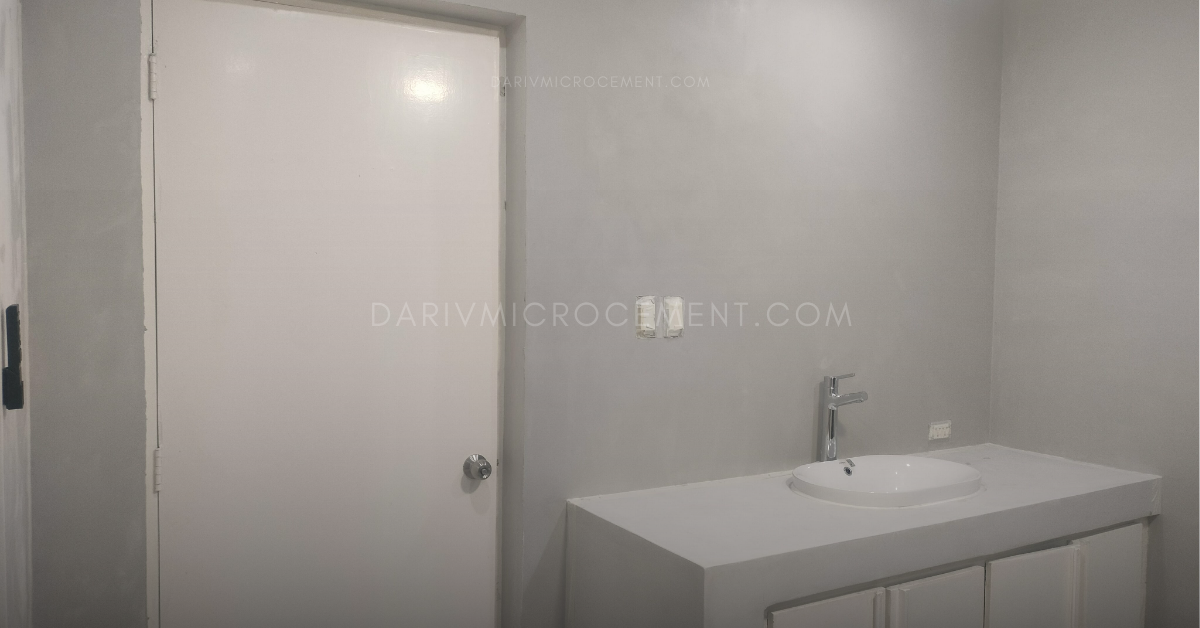
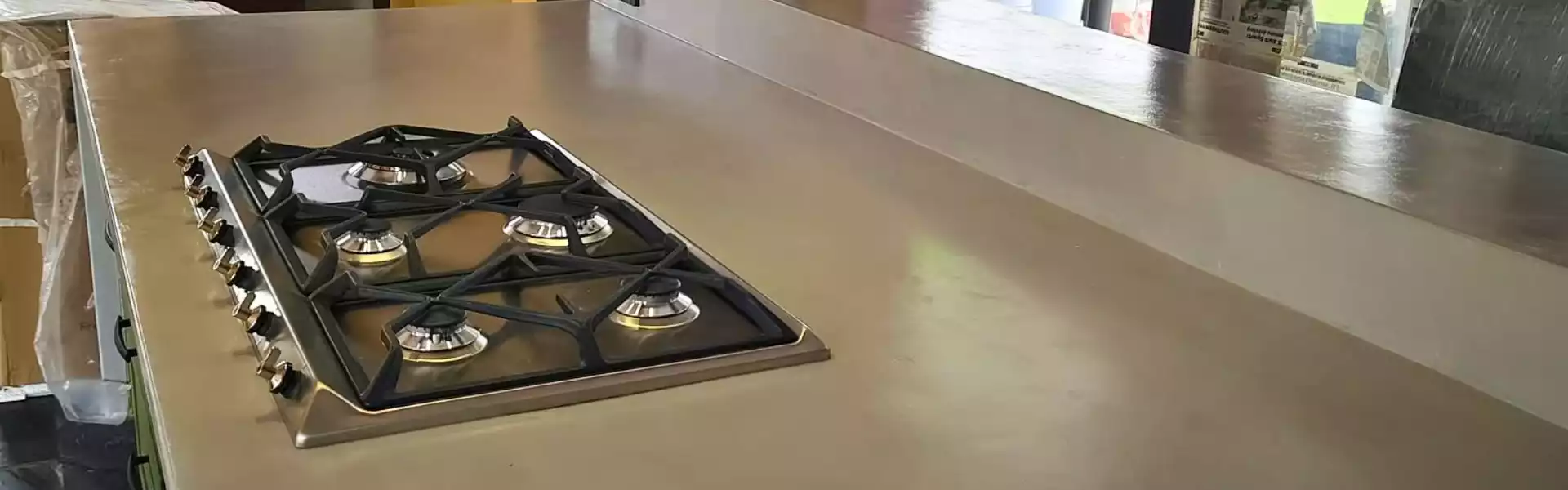
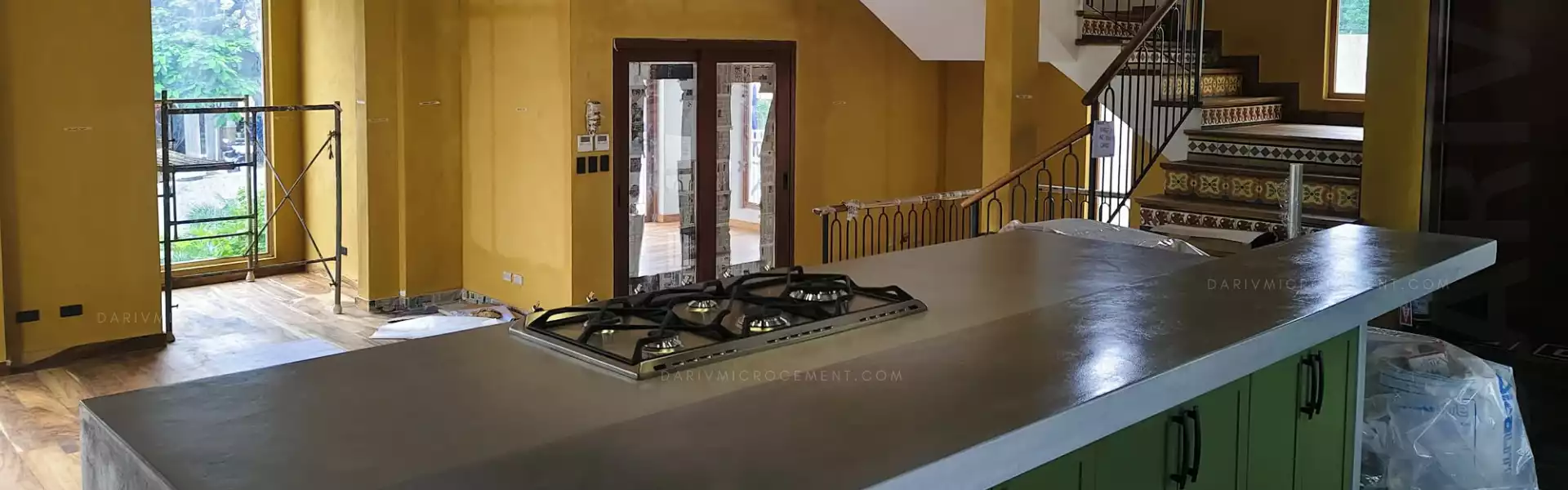
Microcement provides a sleek, durable, water-resistant, and flexible concrete surface that can make your indoors and outdoors standout. But any microcement surface can also lose its original appearance when mishandled, no matter how good it was constructed and sealed. Daily use of a microcement kitchen top, a microcement floor, or a microcement bathroom can leave dirt and stains on its surface.
Regular cleaning and maintenance is important for keeping the durability and aesthetic appeal of microcement. When poorly maintained, microcement can also get vulnerable to mold, scratches, and dents.
How to remove stains from a microcement surface?
One common question our clients ask is how to remove stains from microcement. Here are standard cleaning guidelines for cleaning microcement:
- Any microcement surface can be cleaned using a microfiber cloth and clean water.
- Wipe off spills and stains immediately with a microfiber cloth.
- For stubborn stains, use microfiber cloth and neutral pH cleaner.
- For more stubborn stains, especially those that have dried up and penetrated the microcement surface, chemical stain removers may help restore the original appearance as long as you do not use hard scrubbers because it would damage the microcement’s sealer and PU coating.
How to clean everyday household substances that can spill and stain microcement
To demonstrate how to clean microcement surfaces from spills, we conducted a brief experiment using six common kitchen substances:
- Coffee
- Cola
- Ketchup
- Gravy
- Soy sauce, and
- Fish sauce


We also tested how to clean microcement from household substances that leave tough stains or blots. These substances are:
- Lip tint
- Lipstick
- Crayon
- Ballpen
- Permanent marker


To remove these stains from the microcement, we used the following household cleaning materials, all of which you can avail in your local grocery or supermarket:
- Microfiber rag
- Scrubbing pad
- Neutral pH cleaner
- Liquid detergent
- Acetone


The microcement surface we used is coated with a sealer and protective PU coating. Both are necessary for keeping spills and stains from penetrating deep into the microcement material.
Part 1: How to clean microcement surfaces from regular spills
When you have a microcement surface inside your home or office, you cannot avoid it from encountering spills and stains from food, sauces, and beverages. This experiment shows how to clean microcement from spills on its surface.
In the first video, we allowed the spill to stand on the surface for one minute before wiping it with a microfiber cloth damped with clean water. All spills were cleaned well by the microcement rag and no mark was left on the microcement surface.
In the second video, we allowed the spill to stand on the surface for 30 minutes. After that duration, we wiped the spill with a damp microfiber cloth. The cleaning method yielded the same results. As seen in the video, the microcement surface was thoroughly cleaned.
Based on the experiment, spills from coffee, cola, ketchup, gravy, soy sauce, and fish sauce just leave mild stains that are easy to clean. All you need for cleaning coffee, cola, ketchup, gravy, soy sauce, and fish sauce spills from a microcement surface is a damp microfiber cloth. However, the need for top quality microcement materials and proper microcement application is also important.
As a professional microcement contractor in the Philippines, DARIV only uses high quality materials and tools to make sure your microcement project remains clean, beautiful, and durable for a long time. Read our article on how much microcement costs in the Philippines.
Part 2: How to clean microcement surfaces from stains
To demonstrate how to clean microcement, the second part of the experiment used tougher stains from materials available in your house or office. We applied these stains on the sample microcement surface. Then we left it for five minutes to see what is needed to remove the stain without damaging the microcement surface.
Microcement cleaning method 1: Use a damp microfiber rag
Microfiber rags are the best material for wiping and cleaning microcement. Unlike other material used for rags, microfiber cloths are lint-free due to their tightly woven, and very fine fibers. Because of their composition, microfiber rags can easily pick up dust and link, without scratching the surface of microcement.
Results:
- After wiping the surface with microfiber rag damped with clean water, the stains from the liquid lipstick, bullet lipstick, and crayon faded. However, these stains were still visible on the microcement surface.
- Stains from the permanent marker and ball pen, nonetheless, were visible. This meant the damp microfiber rag was unable to loosen the stains’ attachment to the microcement surface.
Microcement cleaning method 2: Use a neutral pH cleaner and a microfiber rag
The second cleaning method we used was a neutral pH cleaner and a microfiber rag. Neutral pH cleaners are cleaning products who pH level is at 7. Thus, because they are neither acidic nor alkaline, these cleaners are safe to for cleaning surfaces like microcement, polished concrete, natural stone, wood, laminate, and even the most delicate finishes.
Let’s see how effective neutral pH cleaner and microfiber rag are in removing the remaining stains.
Results:
- The neutral pH cleaner and microfiber rag was able to clear away stain from the crayon and the bullet lipstick.
- Stain from the liquid lipstick, ballpen ink, and permanent marker faded but were still visible on the microcement surface. However, no matter how hard we tried, we were unable to remove the stain marks of liquid lipstick, ballpen ink, and permanent marker.
Microcement cleaning method 3: Use neutral pH cleaner and a scrubbing pad
Scrubbers or scrubbing pads are common cleaning materials in households. Let’s see if the scrubbing pad and neutral pH cleaner can remove any of the stubborn stains.
Results:
- The scrubbing pad and neutral pH cleaner were able to clear away the remaining marks from both liquid lipstick and ballpen.
- Stain from the permanent marker further faded but was still visible on the microcement surface.
Microcement cleaning method 4: Use scrubbing pad and liquid detergent
Most dishwashing liquids are not neutral. Many have a pH level between 7 and 9, which is mild alkaline, so they can break down grease and food residues better. Stronger commercial grade cleaning solutions and soaps can even have a higher pH level for most effectiveness in removing dirt and stains.
Results:
- Stain from the permanent marker was still visible despite constant scrubbing.
- The scrubber, however, slightly damaged the protective PU coating of the microcement surface (See images below)


Method 5: Use acetone for ink stains
Acetone is a colorless solvent used in different applications like removing nail polish and paint. For this method, we used a second microcement sample and inked it with the ballpen and permanent marker. Once the ink dried, we applied the acetone over the stains with the help of cotton.
Results:
- Stain from the ballpen was cleared away with the use of acetone
- Stain from the permanent marker faded significantly, but was not fully removed
- Acetone did not damage the microcement’s protective PU coating.
- The permanent marker proved to be the most stubborn stain
Based on the second experiment, we found evidence that:
- Microcement must be properly sealed and covered with a PU coating to keep most solutions and substances from staining its surface
- Ink, especially from a permanent marker, can harm the microcement surface because it is designed to penetrate most surfaces, especially porous materials.
- Stains that spilled over the microcement surface must be wiped off and cleaned immediately. Most stubborn stains, especially permanent ink, are difficult to remove once they dry up.
- Damp microfiber rags and neutral pH cleaners are gentle on microcement. However, they cannot remove all kinds of stains. Make sure to keep materials with stubborn stains away from your microcement.
- Using scrubbers on microcement can ruin its protective surface.
Conclusion on how to clean microcement
To conclude, here are important findings from our brief experiment:
- Spills from coffee, cola, ketchup, gravy, soy sauce, and fish sauce just leave mild stains. These are easy to clean using a damp microfiber cloth.
- Microcement cloth and clean water cannot remove stubborn stains. You also need neutral pH cleaners and special chemical cleaners to remove stains that remain after cleaning the surface with a damp microfiber cloth.
- Keep sources of stubborn stains away from your microcement surface.
- Using hard scrubbers can ruin the surface of microcement.
- For microcement, you need top quality microcement materials and proper microcement application.
DARIV is the leading professional microcement contractor in the Philippines. We only use high quality materials and tools to make sure your microcement project gives you excellent outcomes. Contact us now to know how much microcement is in the Philippines, or for any other inquiries related to microcement.