
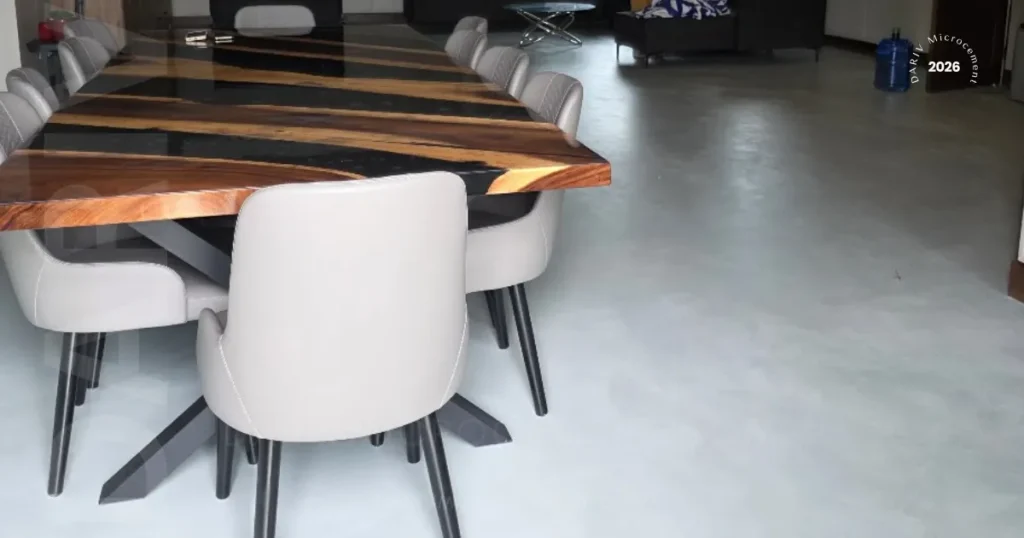
Microcement flooring for a rest house in the Philippines
Using microcement flooring for your rest house in the Philippines is an excellent decision. A rest house more than just a place to stay. It is a retreat—a space designed for slowing down, reconnecting with nature, and stepping away from the demands of everyday life.
Because of this, every material used in a rest house should contribute not only to its appearance but also to its comfort, durability, and ease of maintenance.
At DARIV, one material that has become increasingly attractive for contemporary rest house interiors and exteriors is microcement.
With its seamless appearance, minimalist character, and ability to work across different surfaces, microcement can transform ordinary rooms into refined, relaxing environments.
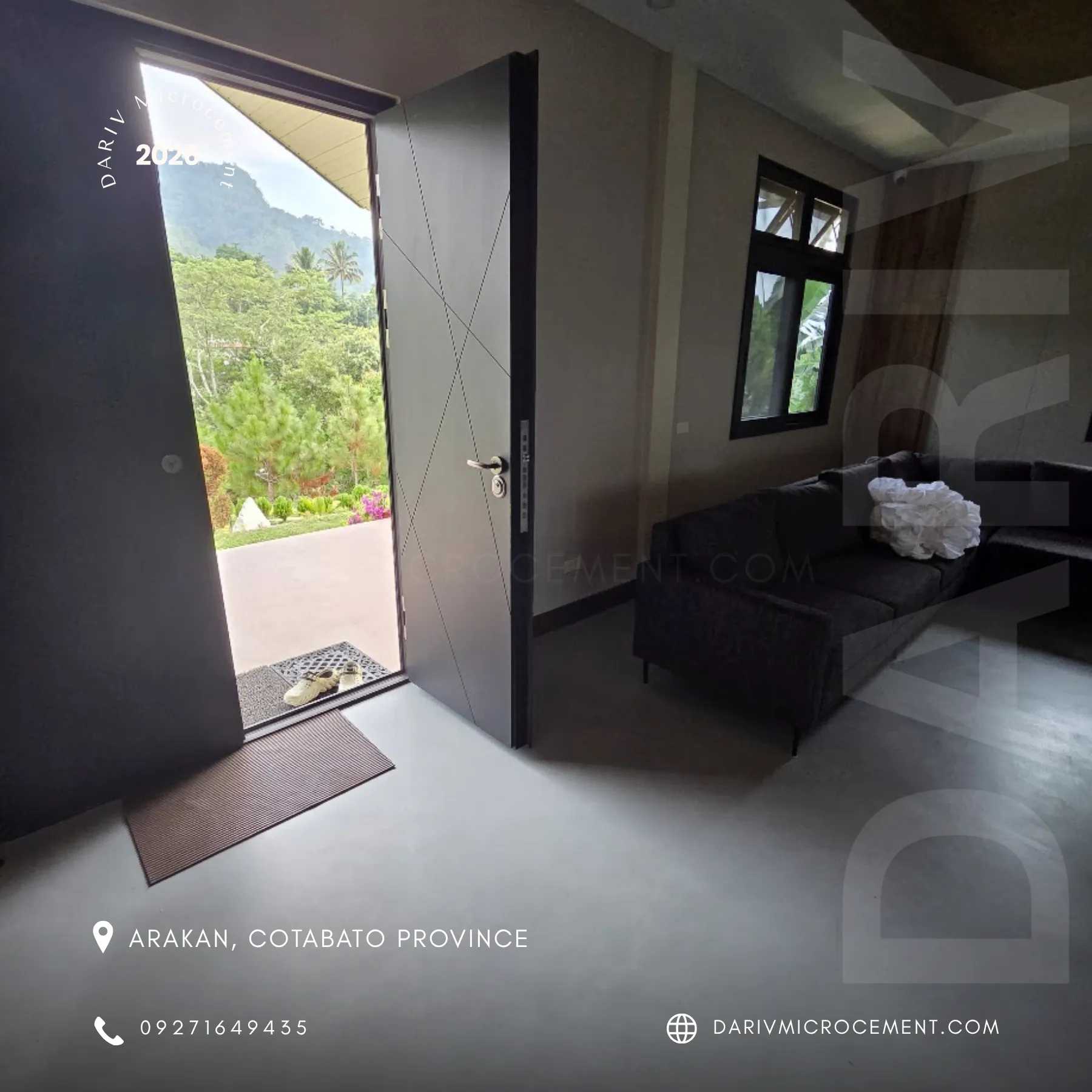
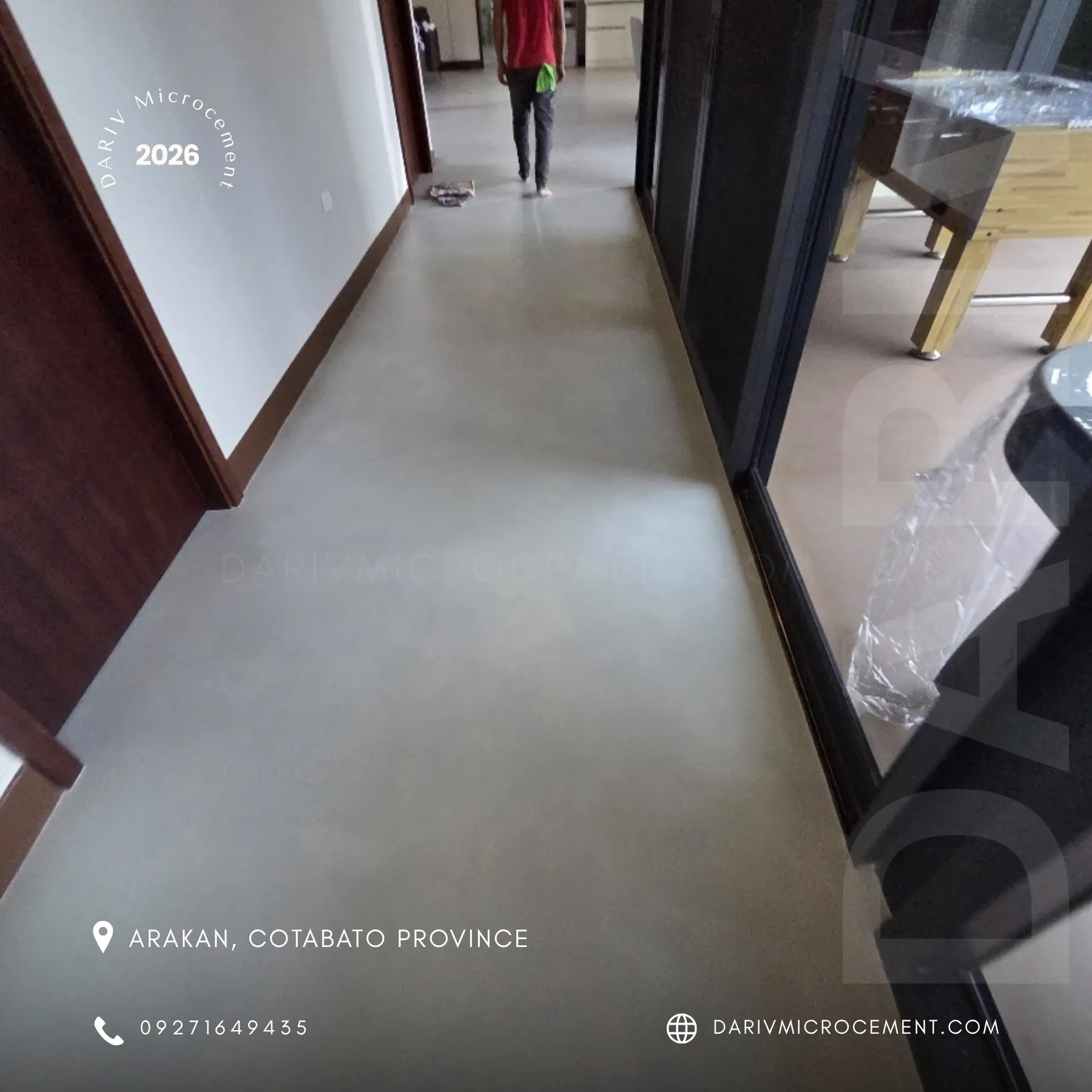
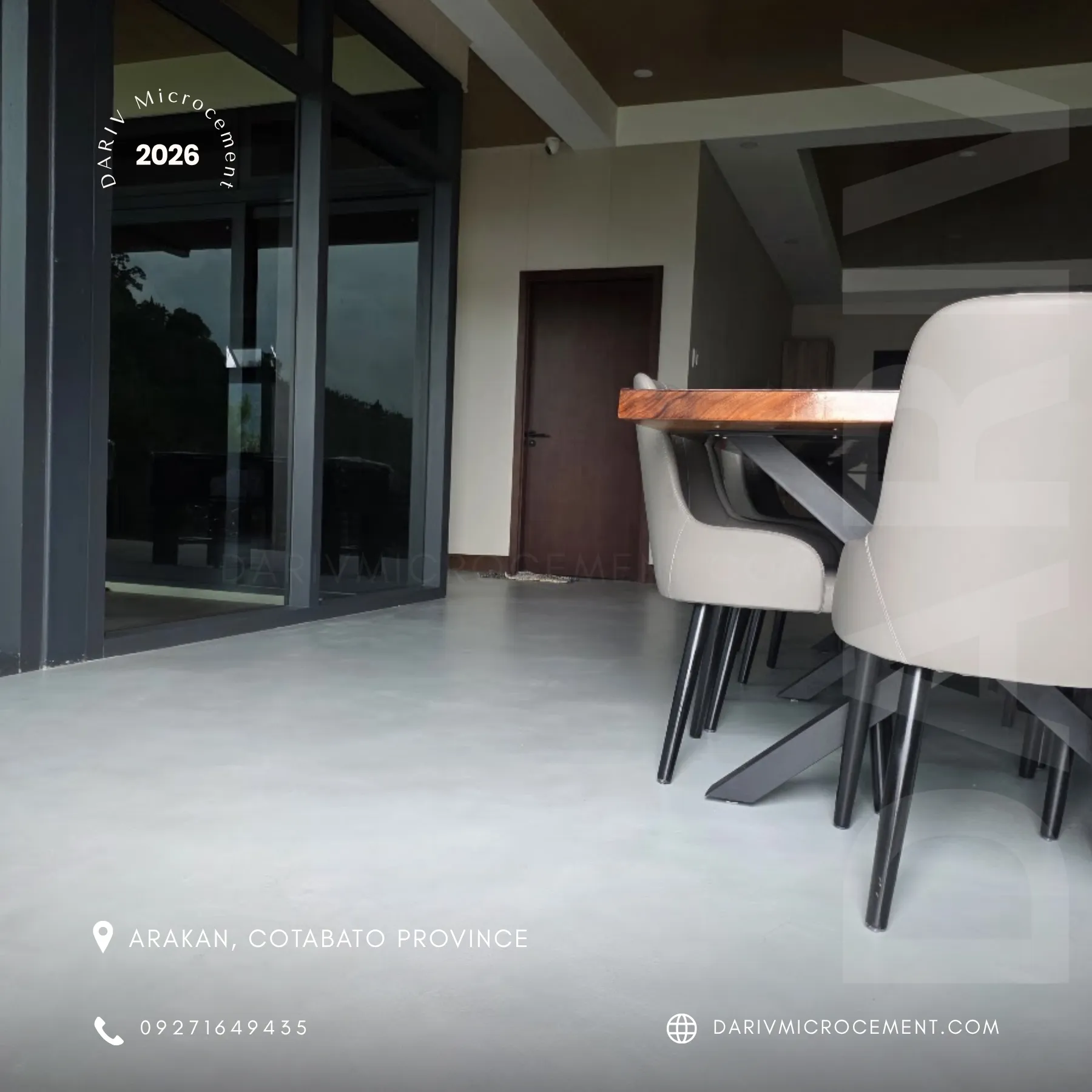
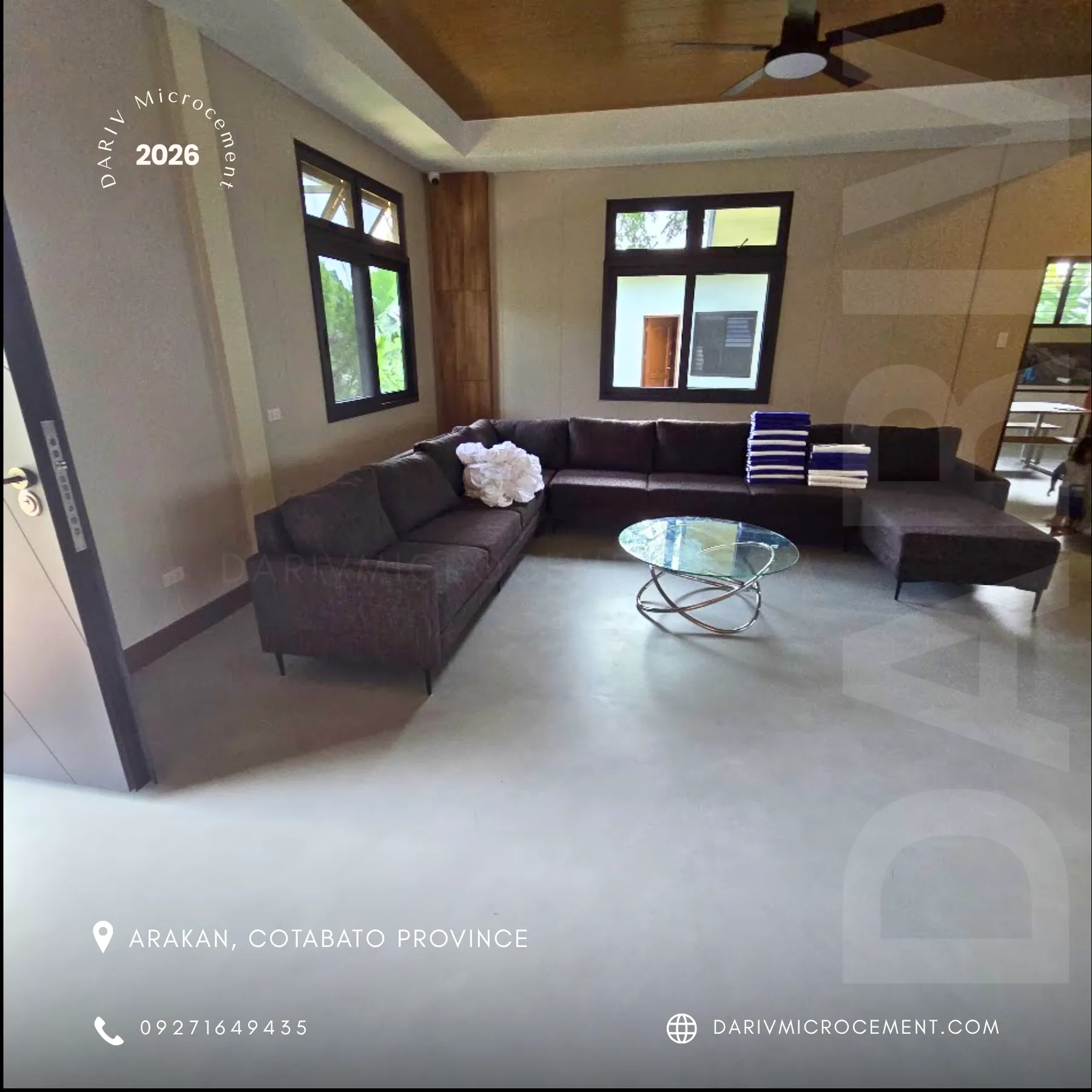
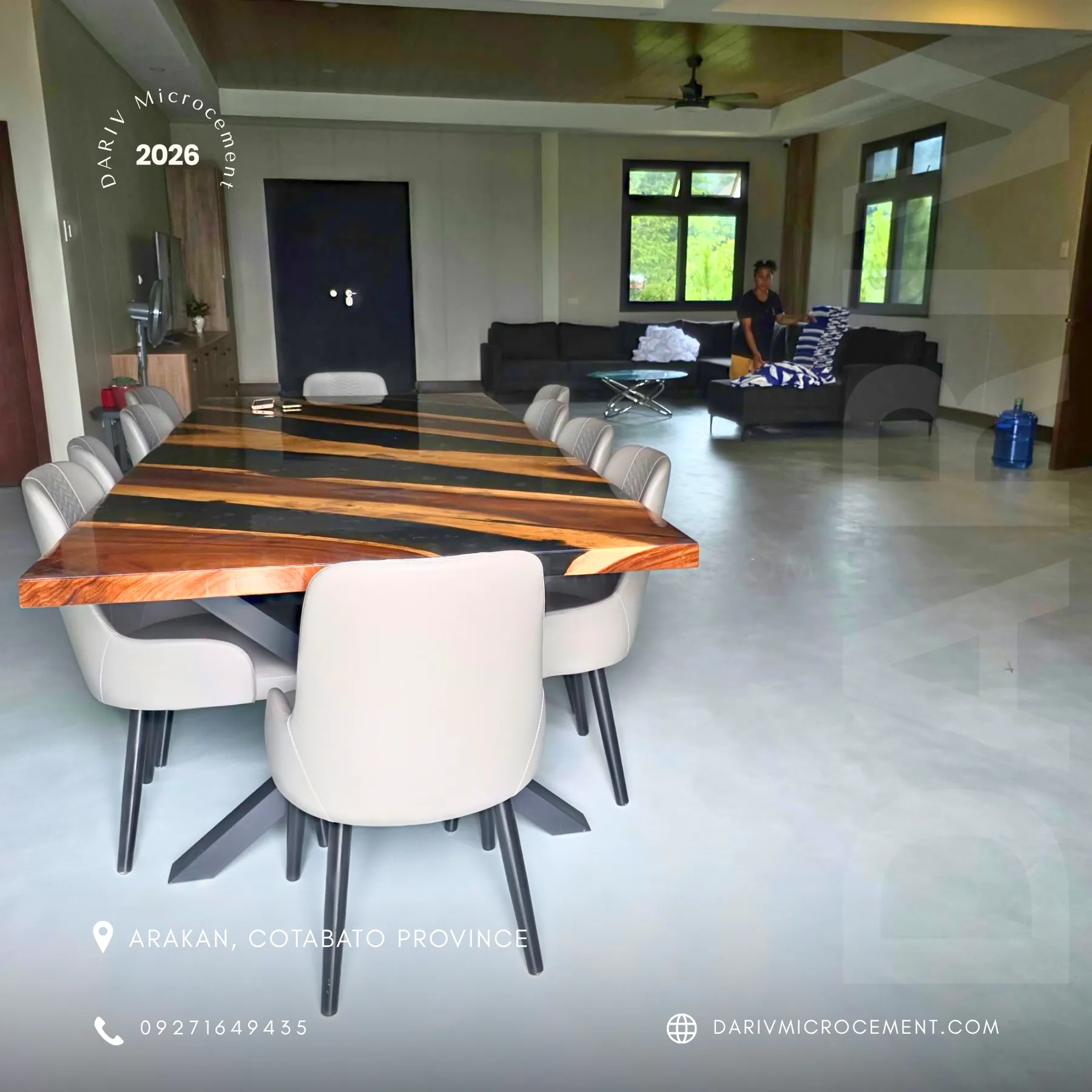
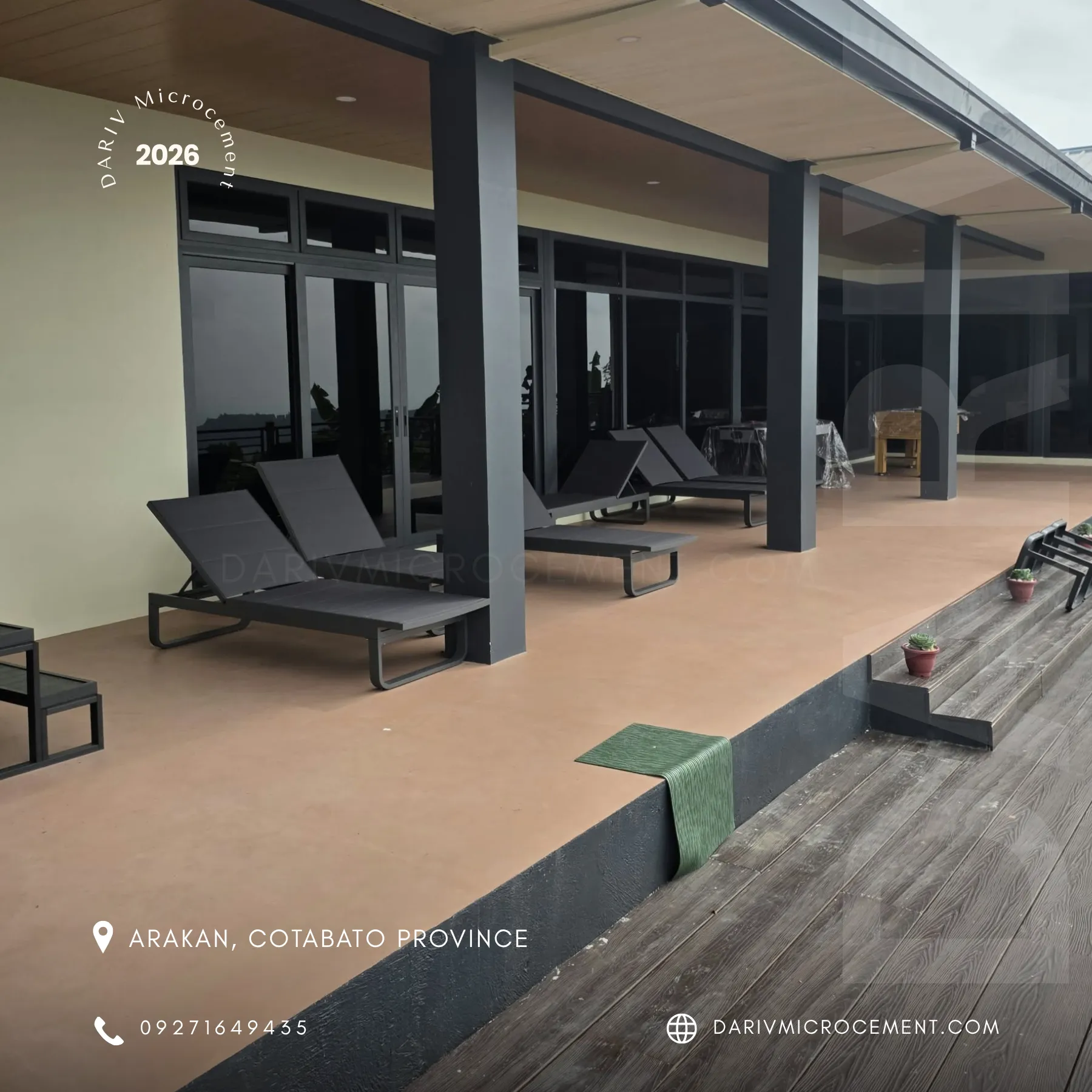
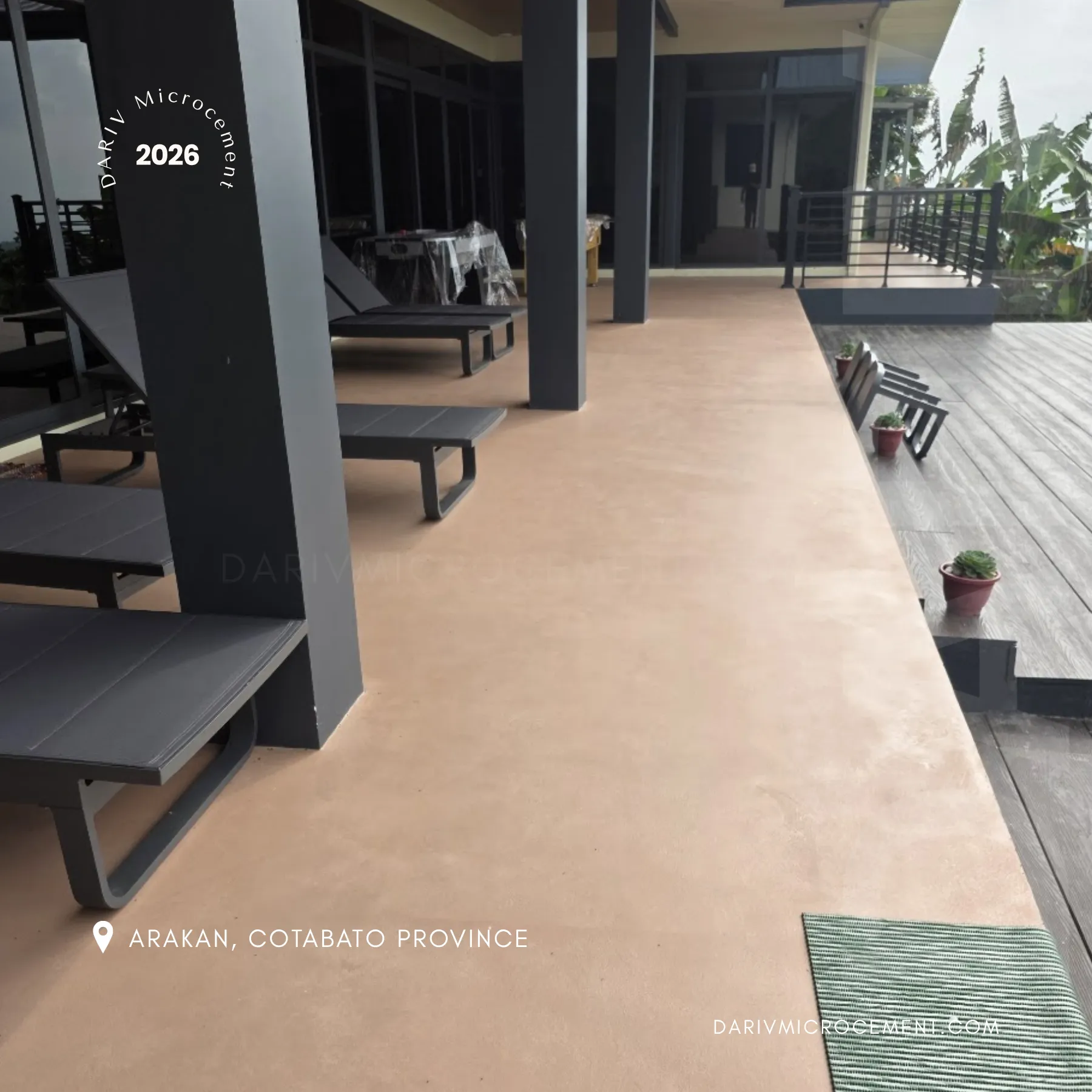
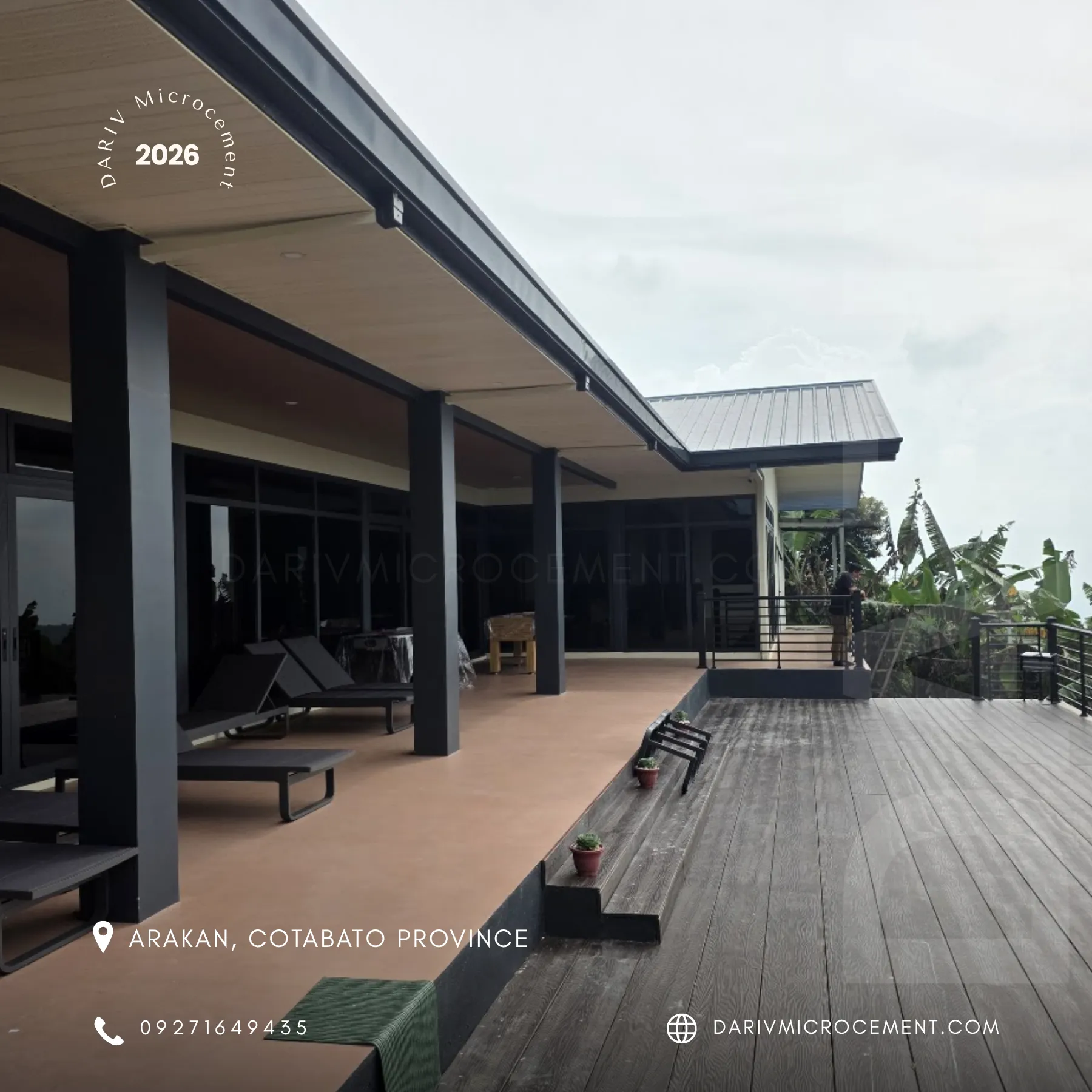
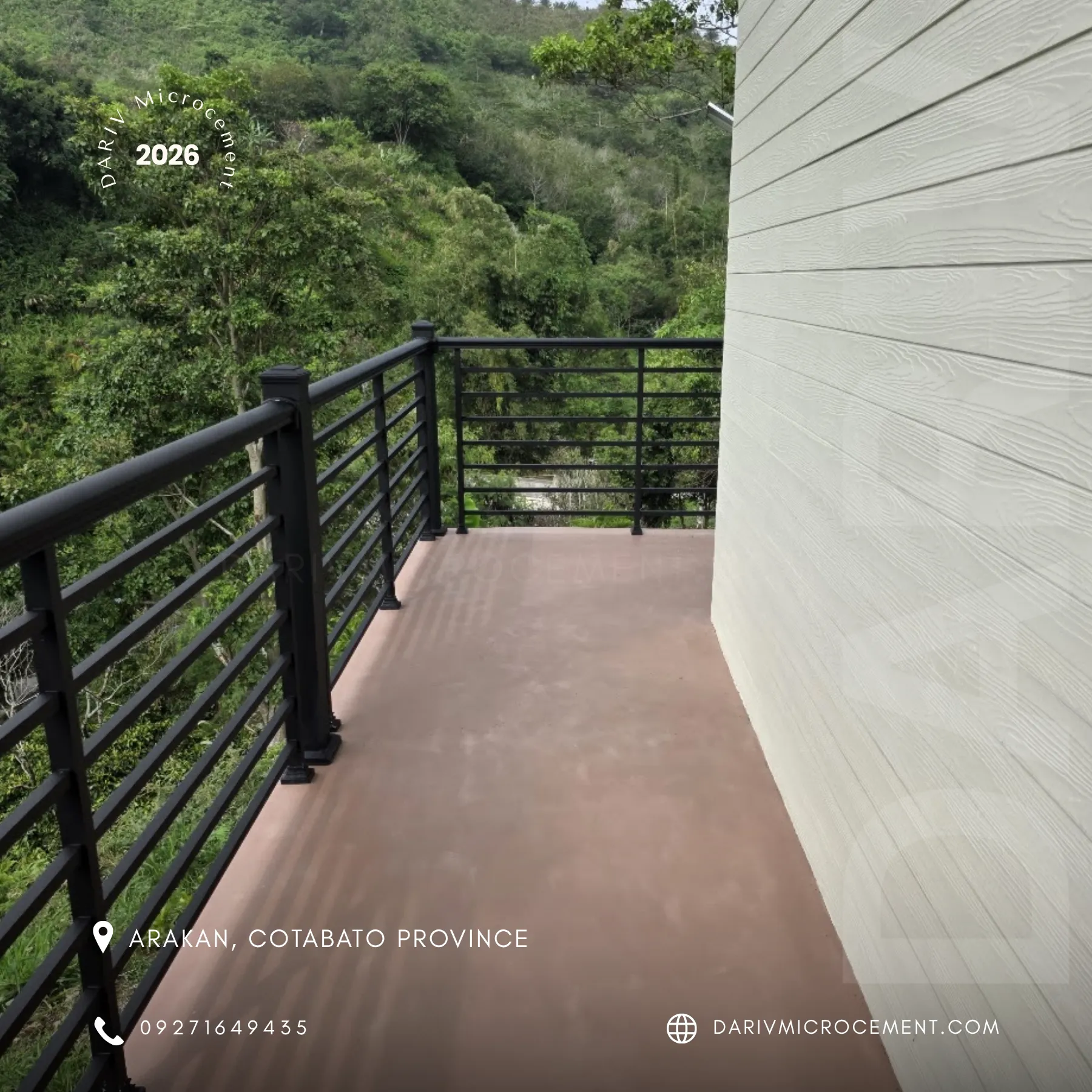
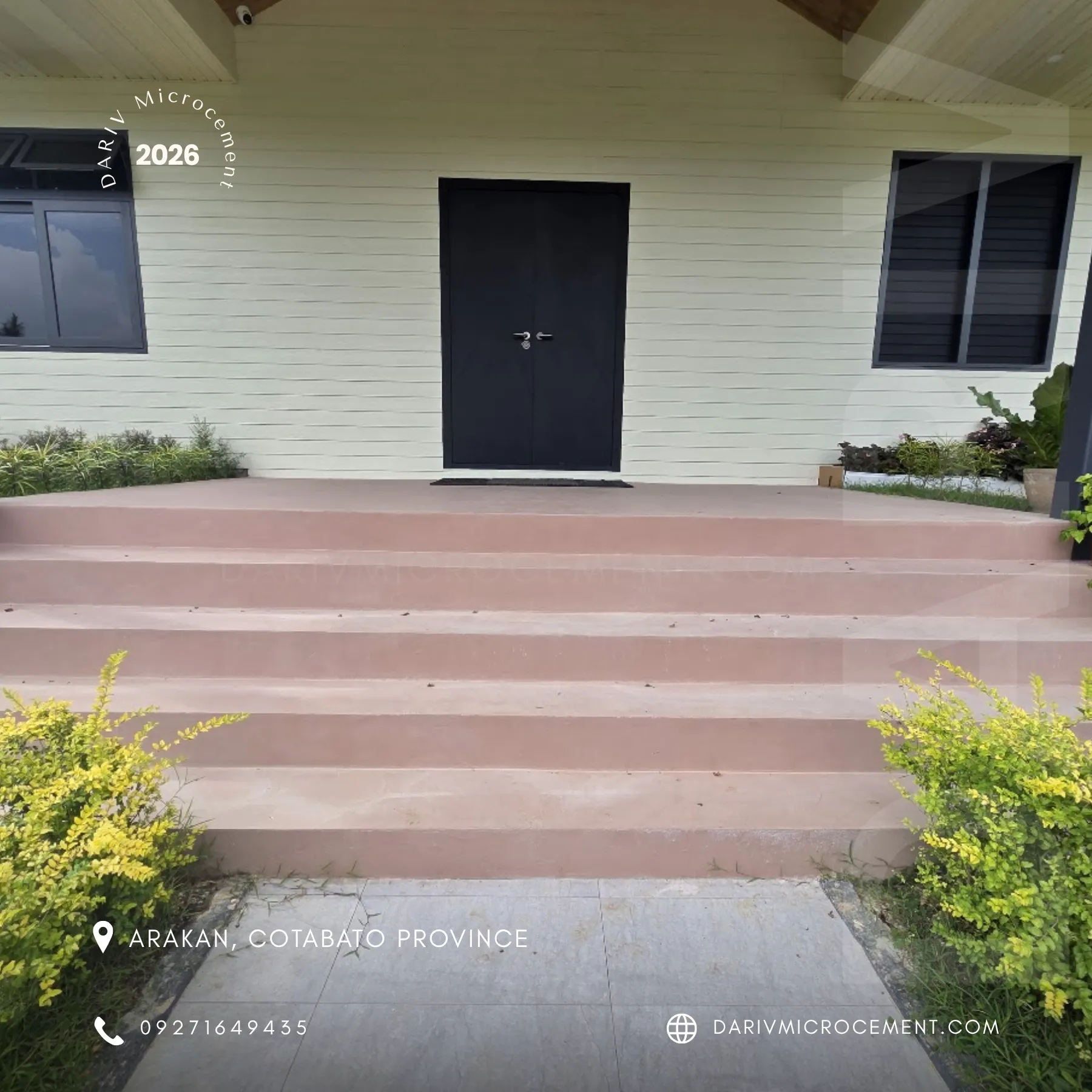
This rest house in Arakan, Cotabato Province is one of the many clients we served using microcement. Located in a quiet provincial setting, microcement helped create a sophisticated design for this rest house, making it remains warm, natural, and inviting.
See a breakdown of costs for a microcement project in the Philippines.
What Is Microcement?
Microcement is a thin decorative coating system applied over prepared flooring to create a smooth, continuous finish.
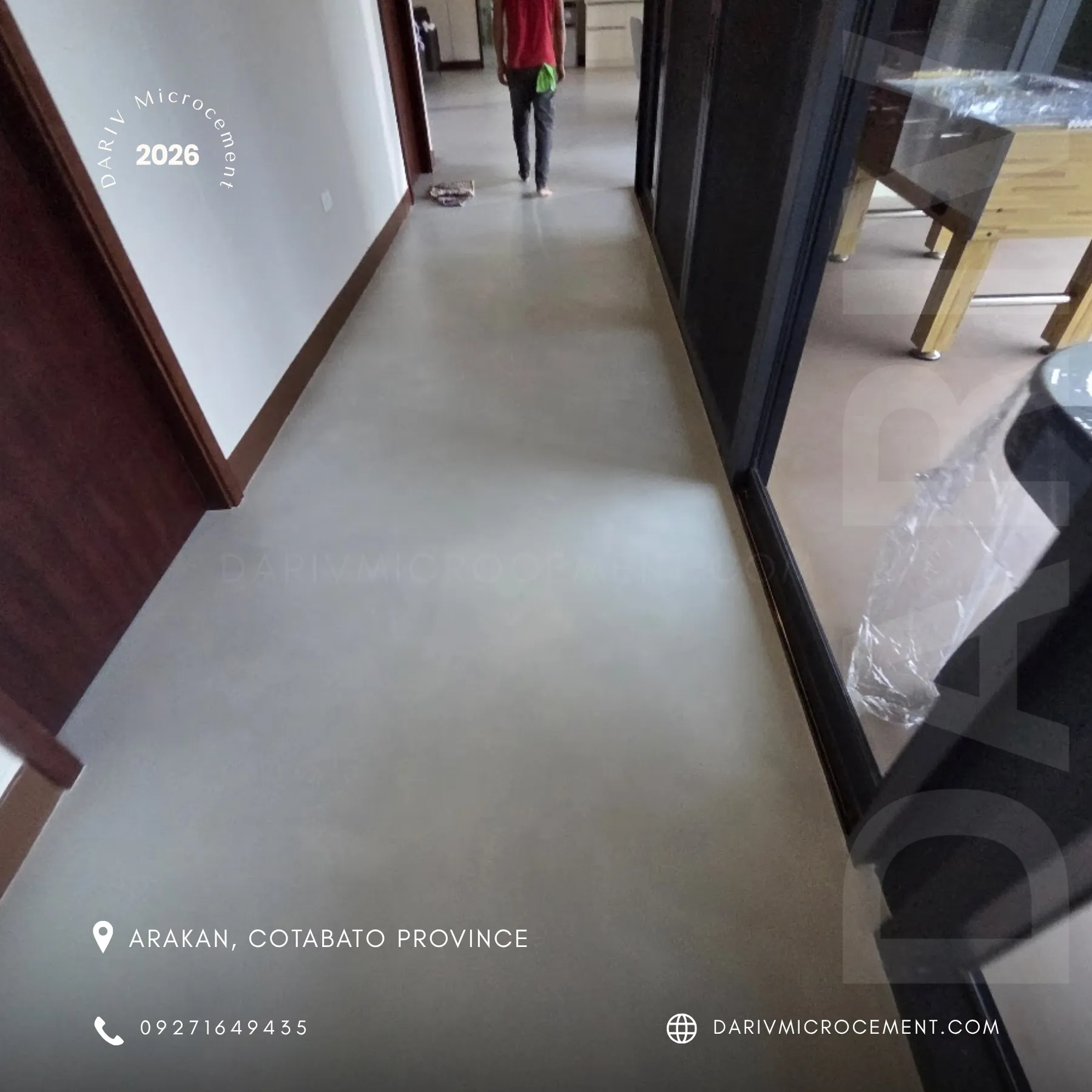
Unlike conventional tiles, microcement does not rely on visible grout lines to define the surface. Check out the light gray flooring we installed for this rest house. The gray perfectly matches the rest house’s black and red theme.
Once properly installed, microcement give a more unified appearance that can visually connect floors. Microcement can also be applied on walls, counters, stairs, and other architectural elements.
Its appeal comes largely from its understated character. Instead of dominating a room with patterns or joints, microcement provides a clean background that allows furniture, lighting, natural textures, and architectural details to stand out.
For a rest house in the Philippines, where the goal is often to create a calm and uncluttered atmosphere, the simplicity of a microcement flooring is undeniably effective.
A Seamless Look for Relaxing Interiors
One of the most recognizable qualities of a microcement flooring is its seamless visual effect.
Traditional floor tiles naturally create a grid because of their grout lines. In large spaces, these lines can make the floor appear visually busy.
Microcement creates a different experience.
The continuous surface allows the eye to travel more naturally across the room, creating a greater sense of openness and flow. In a rest house with an open-plan living room, dining area, kitchen, or lounge, this can help unify the different floor spaces without making them feel disconnected.
The result is an interior that feels cleaner, calmer, and more spacious.
This aesthetic works particularly well with modern tropical, minimalist, industrial, Mediterranean-inspired, contemporary, and resort-style architecture.
A Natural Partner for Rest House Design
Rest houses are often designed around natural surroundings.
Large windows may frame views of mountains, gardens, farmland, forests, or coastal landscapes. Interiors may incorporate timber, stone, woven materials, plants, neutral fabrics, and earth-toned furniture.
Microcement works beautifully within this type of environment because its texture has an organic quality.
Rather than appearing perfectly manufactured, the subtle movement and variation created during application can give the surface depth and character. These natural-looking variations allow microcement to complement materials such as wood, stone, steel, glass, and concrete.
Imagine a rest house living room with large windows overlooking greenery. Warm wooden furniture sits against a seamless microcement floor that runs throughout the space.
Instead of competing with the scenery, the microcement flooring quietly supports the overall design. That is one of microcement’s strongest qualities: it can make a space feel finished without making it feel over-designed.
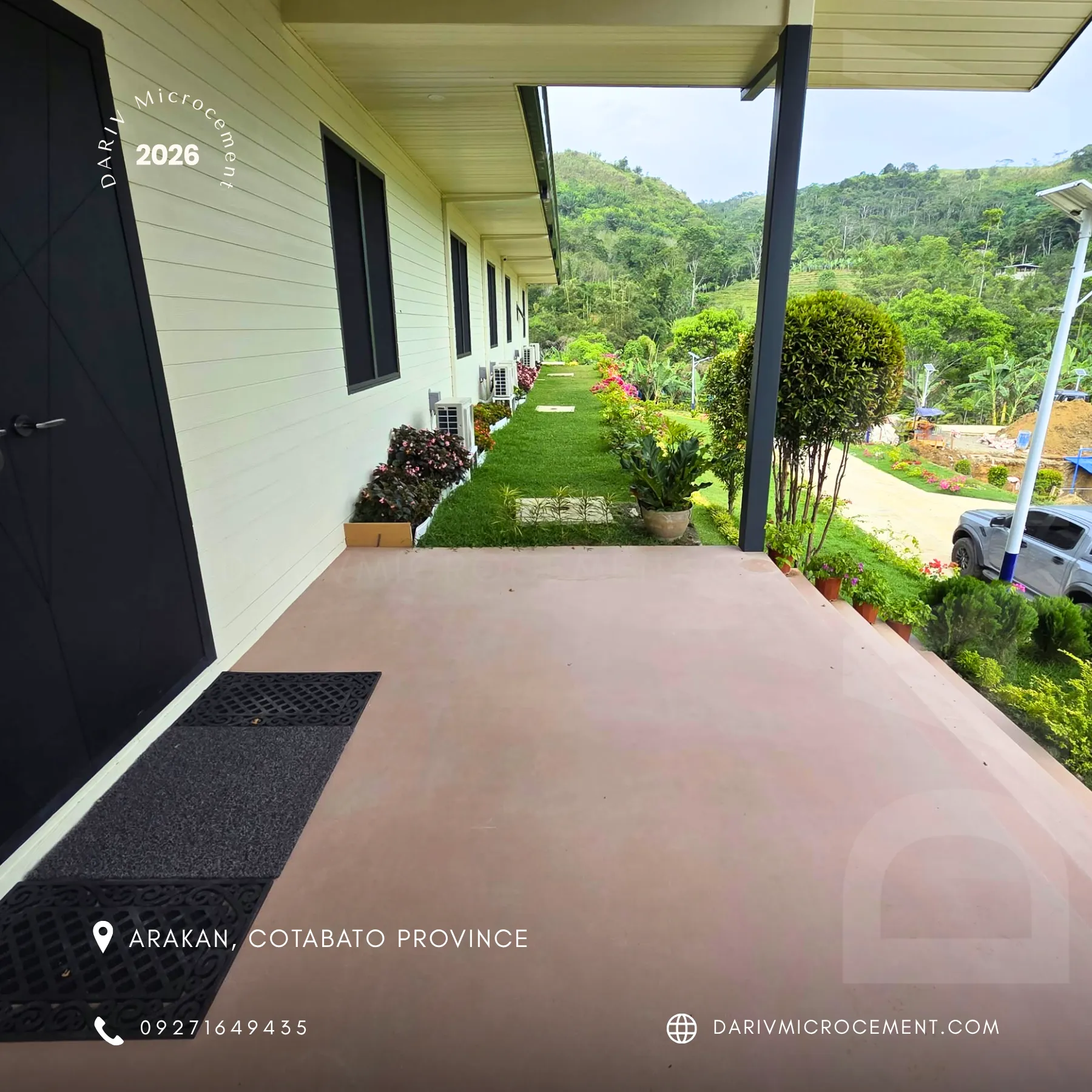
Exteriors are also important spaces that need attention. For this rest house, the owner wanted microcement a reddish hue, which we were able to achieve. The outcome is superb.
Ideal for Contemporary Minimalist Spaces
Many modern rest houses in the Philippines embrace the idea that less is more.
Rather than filling rooms with excessive decorations, the architecture itself becomes part of the visual experience. Materials, textures, natural lighting, proportions, and carefully chosen furniture create the atmosphere.
Microcement is particularly suited to this approach.
Its continuous surface helps reduce visual interruptions. Instead of multiple patterns, joints, borders, and transitions, the space can maintain a more consistent design language.
Using the same or complementary microcement finishes in several locations can also help establish a unified visual identity throughout the property.
Making Smaller Rest Houses Feel More Spacious
Not every rest house needs to be large.
Compact vacation homes and countryside retreats can benefit significantly from thoughtful material selection.
Visually fragmented surfaces can sometimes make smaller rooms feel even smaller. Large tile patterns, strong grout lines, and frequent changes in flooring materials divide the space into sections.
A more continuous finish can help achieve the opposite effect.
By reducing visual interruptions, microcement can create the impression of a broader, more connected surface. When paired with neutral colors and good natural lighting, microcement can contribute to a brighter and more spacious-looking interior.
For owners building compact rest houses, this can be particularly valuable.
Flexible Design Possibilities
Microcement does not have to mean one particular shade of gray. Microcement is very versatile in color. Check out these microcement swatches we can offer.
Microcement Colors and Swatches
Depending on the chosen system and design direction, microcement finishes can be created in different colors and tonal variations.
Soft gray remains popular for contemporary spaces, but warmer tones can create a very different atmosphere.
Beige, stone, taupe, sand, warm gray, off-white, and earthy tones can help create a softer rest-house environment that feels connected to nature.
A cooler gray finish may suit an industrial-inspired retreat, while warmer neutral tones may work better for a tropical or Mediterranean-style property.
The final texture can also influence the character of the room. Some projects may call for subtle movement and variation, while others require a quieter, more uniform appearance.
This makes proper sample approval important before large-scale application begins.
Easier Visual Maintenance Without Grout Lines
Grout can become one of the most noticeable maintenance concerns in tiled areas.
Because microcement creates a continuous finished surface, there are no conventional tile grout lines running throughout the floor.
From a visual standpoint, this makes the surface easier to keep looking clean and uninterrupted.
Regular cleaning is still necessary, of course, and homeowners should always follow the maintenance recommendations for the specific coating and protective sealer used.
Like any architectural finish, microcement is not maintenance-free. Proper installation, sealing, cleaning products, and ongoing care all contribute to the lifespan and appearance of the completed surface.
Installation Matters
A beautiful microcement finish depends heavily on proper surface preparation and professional application.
Microcement should not simply be treated as decorative paint.
The condition and stability of the substrate must first be evaluated. Cracks, moisture concerns, movement, uneven surfaces, and other underlying issues may require treatment before the decorative coating system is applied.
Depending on the project, installation may involve substrate preparation, primers, reinforcement where required, multiple microcement layers, sanding, finishing, and protective sealing.
Skipping these steps can compromise both the appearance and long-term performance of the finished surface.
For this reason, homeowners considering microcement for a rest house should work with experienced applicators who understand the complete system rather than focusing only on the visible final layer.
Connecting Indoor and Outdoor Living
One of the defining characteristics of many rest houses is the connection between indoor and outdoor spaces.
Living rooms may open toward patios. Dining areas may overlook gardens. Bedrooms may face balconies or terraces.
A carefully coordinated microcement palette can strengthen this connection.
Similar tones can be used across different architectural elements to create a harmonious transition from one space to another. Combined with large glass doors, natural light, landscaping, and outdoor furniture, this can give the property a relaxed resort-like atmosphere.
The objective is not necessarily to make everything identical, but to create visual continuity.
A Finish That Lets the Architecture Speak
Perhaps the greatest advantage of microcement in a rest house is what it does not do.
It does not have to demand attention.
Instead, it can become a quiet architectural backdrop—allowing natural scenery, furniture, artwork, lighting, landscaping, and the architecture itself to become the focus.
For homeowners in the Philippines, who want a retreat that feels modern without being overly complicated, this quality is especially valuable.
A well-designed rest house should feel peaceful the moment you enter.
The materials should work together naturally. Spaces should flow. Colors should complement the surroundings. Surfaces should feel intentional without becoming distracting.
Microcement can help achieve exactly that.
When properly specified and professionally installed, it offers a refined combination of seamless design, contemporary character, material flexibility, and visual simplicity.
For a home designed around rest, relaxation, and escape, sometimes the most powerful design choice is the one that quietly brings everything together.
Want to know how much you need to invest in microcement for your rest house? Send us a message.